


Tag: California Crime

  • The Clues That Couldn’t Be Ignored: How Investigators Solved the Laci Peterson Case

    The Clues That Couldn’t Be Ignored: How Investigators Solved the Laci Peterson Case

    The Clues That Couldn’t Be Ignored: How Investigators Solved the Laci Peterson Case

    Category

    True Crime | Criminal Investigation | Real Stories

    Tags

    Laci Peterson, Scott Peterson, True Crime, Criminal Investigation, California Crime, Forensic Evidence, Real Crime Story, Law Enforcement, United States, Justice


    In late December 2002, what began as a missing-person investigation in the quiet city of Modesto, California, quickly became one of the most closely followed criminal cases in the United States. The disappearance of 27-year-old Laci Peterson, who was eight months pregnant with her son, Connor, captured nationwide attention and prompted an extensive search involving local police, volunteers, and federal agencies.

    As investigators gathered evidence, the case gradually shifted from a missing-person inquiry into a homicide investigation. Through careful forensic work, interviews, and digital evidence, detectives built a case that eventually led to the arrest and conviction of Laci’s husband, Scott Peterson.

    More than two decades later, the investigation remains an important example of how patient detective work and evidence-based policing can solve a complex criminal case.

    A Family Reports a Loved One Missing

    On December 24, 2002, Scott Peterson reported that his wife, Laci, had not returned home after supposedly taking a walk with the family’s dog.

    Friends and relatives immediately became concerned because Laci was expecting the couple’s first child and was known for staying in close contact with her family.

    Police officers quickly responded to the missing-person report.

    Initially, investigators considered several possibilities.

    Perhaps she had experienced a medical emergency.

    Maybe she had become lost or accepted a ride from someone she knew.

    At that stage, detectives treated the investigation as a missing-person case and searched for every possible lead.

    A Massive Search Begins

    Law enforcement organized one of the largest search efforts in the region’s history.

    Search teams examined neighborhoods, parks, waterways, and surrounding farmland.

    Volunteers distributed flyers throughout Modesto and neighboring communities.

    News coverage spread across the country, generating thousands of tips from the public.

    Detectives carefully reviewed every phone call, interview, and reported sighting.

    Although many leads proved unreliable, investigators continued building a detailed timeline of Laci’s final known movements.

    Detectives Examine the Evidence

    As the investigation progressed, detectives began comparing witness statements with physical and digital evidence.

    Investigators reviewed:

    • Phone records
    • Financial activity
    • Vehicle movements
    • Witness interviews
    • Search histories and timelines

    Each piece of information was evaluated independently before being compared with other evidence.

    Detectives also learned about Scott Peterson’s activities in the days leading up to Laci’s disappearance.

    Rather than relying on assumptions, investigators focused on facts that could be verified through records and physical evidence.

    This methodical approach became one of the investigation’s greatest strengths.

    The Investigation Changes Direction

    As weeks passed without finding Laci, detectives noticed inconsistencies between various statements and the available evidence.

    Attention increasingly focused on Scott Peterson.

    Investigators continued surveillance while gathering additional forensic information.

    The breakthrough came in April 2003, when the remains of Laci Peterson and her unborn son were discovered separately along the shoreline of San Francisco Bay.

    The discovery confirmed that the investigation had become a homicide case.

    Forensic experts carefully examined the evidence and worked to determine how the discoveries fit within the overall timeline.

    Building the Case

    Prosecutors knew that the case relied heavily on circumstantial evidence rather than eyewitness testimony.

    Investigators assembled numerous pieces of information that, when viewed together, presented a consistent sequence of events.

    Evidence presented during the investigation included:

    • Cell phone location records.
    • Boat ownership and launch records.
    • Witness interviews.
    • Financial documentation.
    • Forensic examinations.
    • Timeline reconstruction.

    Individually, each piece answered only part of the puzzle.

    Together, they created a detailed picture that prosecutors believed established Scott Peterson’s responsibility beyond a reasonable doubt.

    The Arrest

    On April 18, 2003, Scott Peterson was taken into custody after months of investigation.

    Authorities stated that the decision followed extensive evidence gathering rather than any single discovery.

    The arrest marked a significant milestone for investigators who had worked continuously since Laci’s disappearance.

    Family members expressed hope that the legal process would finally provide answers.

    Court Proceedings

    The trial attracted national media attention.

    Over many months, prosecutors presented expert testimony, forensic findings, witness accounts, and reconstructed timelines.

    Defense attorneys challenged many aspects of the investigation, while jurors carefully reviewed the evidence presented by both sides.

    After deliberations, the jury found Scott Peterson guilty of the murders of Laci Peterson and their unborn son.

    Although later court rulings modified his sentence, the murder convictions remain in place.

    The case demonstrated the importance of thorough investigations built on evidence rather than speculation.

    Lessons from the Investigation

    The Peterson investigation influenced how many agencies approach high-profile missing-person cases.

    Among its lasting lessons were:

    • Preserve evidence from the earliest stages of an investigation.
    • Build timelines using multiple independent sources.
    • Verify witness statements through physical evidence.
    • Coordinate effectively between local, state, and federal agencies.
    • Communicate carefully with the public while protecting the integrity of the investigation.

    Today, the case continues to be studied by investigators and legal experts because it illustrates how numerous small pieces of evidence can combine to establish a compelling factual record.

    Final Thoughts

    The Laci Peterson case remains one of the most well-known criminal investigations in modern American history.

    What began as the search for a missing woman became a complex homicide investigation that relied on persistence, forensic science, and detailed analysis.

    While no legal outcome could undo the family’s loss, the investigation demonstrated the dedication of detectives who carefully followed the evidence until the person responsible was identified, arrested, and ultimately convicted in court.
  • The Devil in the Darkness: How the Night Stalker Terrorized California Until One Mistake Led to His Arrest

    The Devil in the Darkness: How the Night Stalker Terrorized California Until One Mistake Led to His Arrest

    Image
    Image
    Image
    Image

    Here is a brand-new true crime article package for your website.

    The Devil in the Darkness: How the Night Stalker Terrorized California Until One Mistake Led to His Arrest


    During the summer of 1985, people across California began changing the way they lived.

    Windows stayed locked even during hot nights. Families slept with lights on. Hardware stores sold more locks and alarms than usual. News broadcasts opened with warnings.

    No one knew where the killer would strike next.

    He attacked without following normal patterns. Victims were young and old. Homes were chosen across multiple communities. Police struggled to predict his movements.

    The man responsible became known as the Night Stalker.

    His real identity would remain hidden until one extraordinary investigation—and one critical mistake—ended the fear.

    This is the true story of the murders, the search, and the arrest.


    A Series of Unexplained Attacks

    The crimes began appearing in California during the mid-1980s.

    Victims were attacked in their homes, usually during nighttime hours.

    What made the case especially difficult was the lack of a clear victim profile.

    Some victims were elderly.

    Others were younger adults.

    Different neighborhoods were targeted.

    Investigators initially wondered whether multiple offenders might be involved.

    The attacks appeared random.

    But detectives began connecting details.

    Entry methods looked similar.

    Witness descriptions repeated.

    Physical evidence suggested a single offender.

    Fear spread quickly across the state.


    The Killer’s Method

    Investigators discovered that the offender preferred entering homes at night.

    He often selected vulnerable access points and moved quickly.

    Victims described sudden violence and intimidation.

    Unlike criminals who targeted only money or valuables, this offender created confusion by changing behavior between attacks.

    This unpredictability made it extremely difficult for detectives.

    Traditional profiling methods produced few useful leads.

    Law enforcement agencies from different areas began sharing information.

    The investigation expanded.

    A task force formed.

    Evidence technicians reviewed every detail.


    Building the Investigation

    As attacks continued, pressure on investigators increased.

    Detectives examined:

    • Witness statements
    • Footwear impressions
    • Vehicle reports
    • Neighborhood patterns
    • Physical evidence collected from scenes

    One clue became especially important.

    Investigators recovered a distinctive shoe print.

    This allowed detectives to compare evidence across crime scenes.

    Another breakthrough came from public awareness.

    Television reports and newspapers spread information rapidly.

    Citizens began reporting suspicious activity.

    Police hotlines received thousands of calls.

    Most led nowhere.

    But every new report helped narrow possibilities.


    The Critical Mistake

    After months of investigation, detectives recovered physical evidence connected to a vehicle.

    Inside the vehicle, investigators located information that eventually pointed toward a suspect.

    Authorities identified a name:

    Richard Ramirez.

    His photograph was released publicly.

    Once his face appeared in media coverage, events moved quickly.

    Unlike earlier weeks when the suspect remained anonymous, citizens now knew who police were searching for.

    People across California watched news reports closely.

    The manhunt entered a new phase.


    Citizens Become Part of the Hunt

    One of the most remarkable moments in the case happened after Ramirez realized his identity had become public.

    According to reports from the investigation, he attempted to move through public areas while avoiding police.

    But people recognized him.

    Citizens alerted authorities.

    Some individuals confronted him directly.

    Witnesses helped prevent his escape until law enforcement arrived.

    After months of fear, the community itself became part of ending the case.

    Police took Ramirez into custody in August 1985.

    The arrest marked the end of one of the most intense manhunts in modern California history.


    The Trial

    The legal process attracted enormous public attention.

    Court proceedings lasted for years.

    Prosecutors presented extensive physical evidence and testimony.

    Families described the impact of losing loved ones.

    Investigators explained how evidence from multiple locations connected the crimes.

    The trial became one of the most closely watched criminal proceedings in the United States.

    For survivors and relatives, the courtroom represented more than punishment.

    It represented answers.


    Lessons from the Investigation

    The Night Stalker investigation changed how agencies handled serial crime cases.

    Departments improved communication.

    Evidence sharing expanded.

    Public alerts became more coordinated.

    The case demonstrated how investigations often depend on many small breakthroughs instead of one dramatic discovery.

    Detective work.

    Forensics.

    Witness accounts.

    Public cooperation.

    Each piece mattered.


    Final Thoughts

    The Night Stalker case remains one of the most unforgettable criminal investigations in American history.

    For months, fear traveled faster than facts.

    But persistence, evidence gathering, and public awareness eventually led investigators to the suspect.

    The arrest showed that even when criminals appear impossible to identify, investigations can succeed through patience and coordination.

    One mistake by the perpetrator ended a campaign of fear—and closed one of America’s most notorious murder cases.

    Alt Text for Images

    1. Composite police sketch used during the Night Stalker investigation
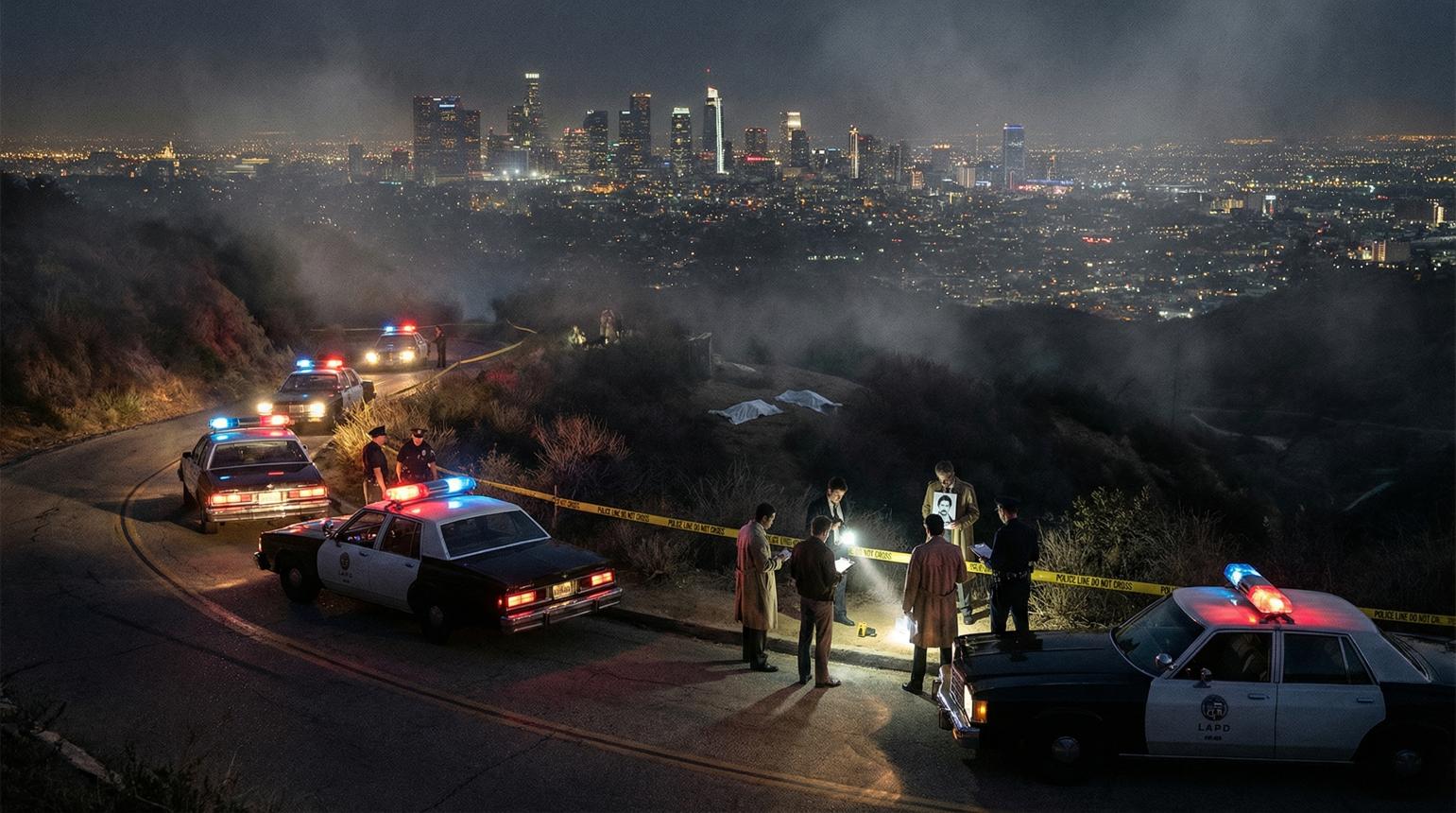
    2. Night view of Los Angeles representing the period of fear in California
    3. Detectives organizing evidence during a serial murder investigation
    4. Neighborhood watch activity during heightened public concern
    5. Crowd and police scene connected to the arrest of the suspect
    6. Courtroom illustration during the criminal trial
    7. Memorial candles honoring victims and survivors