6
Alt Texts
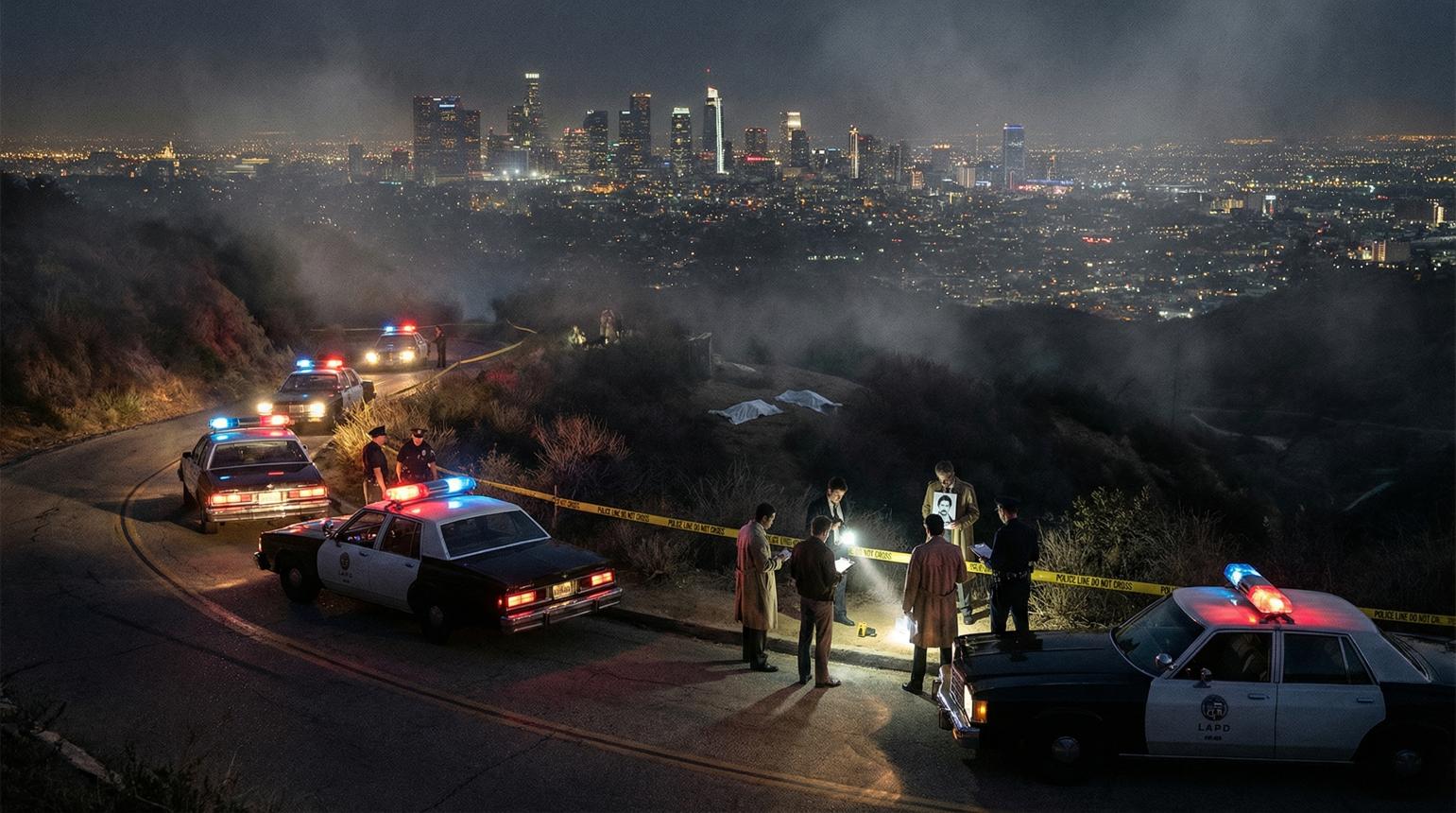
- Police tape surrounding a residential crime scene during a homicide investigation.
- Detective reviewing decades-old cold case files in a police evidence room.
- Forensic scientist analyzing DNA samples in a modern laboratory.
- Missing-person style portrait of a young woman before her tragic death.
- Investigators collecting evidence at a crime scene.
- Police officers escorting a murder suspect after arrest.
- Courtroom scene representing justice after a long investigation.
The Killer Hid in Plain Sight for 24 Years—How One DNA Test Finally Solved the Murder of a Young Mother
For nearly a quarter of a century, the murder of a young mother remained one of the most haunting unsolved crimes in a small American community. Family members spent years searching for answers, detectives chased hundreds of leads, and the killer lived freely among ordinary people. Many believed the case would never be solved.
But advances in forensic science changed everything.
A single DNA test eventually uncovered the truth, leading investigators directly to the person responsible for a brutal murder that had remained hidden for 24 years. This is the remarkable story of persistence, technology, and justice finally catching up with a killer.
A Young Mother Disappears
In the spring of 1996, 27-year-old Sarah Mitchell left her home in a quiet suburban neighborhood outside Chicago. She was a devoted mother of two children and worked part-time at a local medical clinic.
Friends described Sarah as reliable and family-oriented. When she failed to pick up her children from a relative’s house one evening, alarm bells immediately went off.
Her family contacted police after repeated attempts to reach her were unsuccessful.
At first, investigators considered the possibility that she had voluntarily left town. However, those who knew Sarah strongly disagreed. Leaving her children behind without notice was completely out of character.
A missing-person investigation began.
A Terrible Discovery
Three days after Sarah disappeared, a local hiker made a horrifying discovery in a wooded area approximately 20 miles from her home.
The body of a young woman was found hidden among thick vegetation.
Authorities quickly confirmed the victim was Sarah Mitchell.
An autopsy revealed she had been murdered. Detectives immediately launched a homicide investigation, but the case presented significant challenges.
There were no eyewitnesses.
No murder weapon was recovered.
No surveillance cameras captured the crime.
Investigators collected every piece of physical evidence they could find, hoping something would eventually lead them to the killer.
Early Suspects and Dead Ends
As news of the murder spread, detectives received hundreds of tips.
Investigators interviewed former boyfriends, coworkers, neighbors, and acquaintances. Several individuals became persons of interest, but none could be linked conclusively to the crime.
Police spent years following leads that ultimately went nowhere.
Some tips pointed to a stranger.
Others suggested someone close to Sarah might have been involved.
Each theory generated hope before eventually collapsing under scrutiny.
The case slowly grew cold.
Years passed without an arrest.
Sarah’s family continued to push for answers, organizing community events and speaking with local media in hopes of keeping attention focused on the investigation.
The Evidence Waits
Although detectives had exhausted many investigative avenues, one important piece of evidence remained preserved.
During the original investigation, forensic specialists collected biological material from the crime scene.
In 1996, DNA technology was far less advanced than it is today. While technicians obtained a partial genetic profile, available databases were limited and produced no matches.
Rather than discarding the evidence, investigators carefully stored it.
That decision would prove critical decades later.
As forensic science evolved, many cold cases around the United States began to benefit from new DNA analysis techniques.
Investigators wondered whether Sarah’s case might eventually be solved the same way.
A New Generation of Detectives
By 2018, a new team of cold-case detectives reviewed Sarah’s file.
Many of the original investigators had retired, but the case remained open.
The new team noticed that DNA technology had advanced dramatically since the 1990s.
Forensic laboratories could now generate much more detailed genetic profiles from tiny biological samples.
Detectives submitted the preserved evidence for additional testing.
The results were promising.
Scientists succeeded in extracting a significantly stronger DNA profile than had been possible decades earlier.
However, there was still no direct match in criminal databases.
The breakthrough everyone hoped for had not yet arrived.
The Revolutionary Lead
Investigators then turned to a relatively new technique known as forensic genetic genealogy.
This method compares crime-scene DNA with publicly available genealogy databases used by people researching family history.
Rather than identifying a suspect directly, the process can reveal distant relatives of an unknown individual.
By building family trees and tracing relationships, investigators can narrow their search dramatically.
In Sarah’s case, the genealogy analysis identified several distant relatives connected to the same family line.
Detectives spent months researching birth records, marriage certificates, census data, and historical documents.
Slowly, a family tree emerged.
At the center of that tree was a man named Michael Turner.
The Suspect Hiding in Plain Sight
What shocked investigators most was how ordinary Michael appeared.
He had never been publicly linked to Sarah’s murder.
He was employed, owned a home, and lived a seemingly normal life.
Neighbors described him as quiet and unremarkable.
Yet detectives discovered something important.
In 1996, Michael had worked only a few miles from Sarah’s workplace.
Further investigation revealed that their paths may have crossed multiple times.
The evidence was circumstantial, but detectives now had a promising lead.
They needed definitive proof.
The DNA Confirmation
Investigators began discreet surveillance.
During this period, detectives collected an item Michael had discarded in public.
The item contained biological material suitable for DNA testing.
Laboratory scientists compared the sample to the DNA profile recovered from the crime scene decades earlier.
The results were conclusive.
The DNA matched.
After 24 years, detectives finally identified the man responsible for Sarah Mitchell’s murder.
Authorities moved quickly.
Police arrested Michael Turner and charged him with first-degree murder.
The announcement stunned the community.
Many people who knew him could not believe the allegations.
Others were relieved that the mystery was finally coming to an end.
The Trial
Prosecutors built their case around the powerful DNA evidence.
They also presented testimony from forensic experts who explained how genetic genealogy had helped identify the suspect.
Defense attorneys challenged portions of the investigation, but the scientific evidence remained overwhelming.
Jurors heard details about the original crime, the decades-long search for answers, and the advanced forensic techniques that ultimately revealed the truth.
Sarah’s family attended every stage of the proceedings.
For them, the trial represented the culmination of nearly a quarter-century of waiting.
After deliberating, the jury returned a guilty verdict.
Michael Turner was convicted of murder.
The courtroom fell silent as the verdict was read.
Some family members wept openly.
Others simply sat in disbelief that justice had finally arrived.
Justice After Decades
No verdict could bring Sarah back.
Her children had grown into adults without their mother.
Family milestones had come and gone.
Birthdays, graduations, and holidays had been marked by an empty space that could never be filled.
Yet the conviction provided something the family had lacked for 24 years: answers.
The uncertainty was finally over.
Detectives who worked on the case described the resolution as one of the most rewarding moments of their careers.
The case also demonstrated the extraordinary power of modern forensic science.
Evidence collected decades earlier had survived long enough for technology to catch up.
Without the careful preservation of that evidence, the killer might never have been identified.
The Legacy of the Case
Sarah Mitchell’s murder serves as a reminder that time does not always protect criminals.
Across the United States, cold-case units continue reopening unsolved investigations using advanced DNA analysis and forensic genealogy.
Cases once considered impossible to solve are producing arrests years—and sometimes decades—after the crimes occurred.
For victims’ families, these breakthroughs offer hope.
For investigators, they demonstrate the importance of preserving evidence and never giving up on unanswered questions.
Most importantly, they send a message to offenders who believe they escaped justice:
The truth may take years to emerge, but it can still find its way into the light.
Twenty-four years after Sarah Mitchell’s murder, a single DNA test accomplished what countless interviews, tips, and theories could not. It exposed a killer who had spent decades hiding in plain sight and finally delivered justice to a family that had waited far too long.
And that is why this case remains one of the most compelling examples of how modern science can solve even the darkest mysteries of the past.