Tag: Unsolved Murder

  • A 39-Year-Old Cold Case Finally Reached an Answer Through Modern DNA Technology

    A 39-Year-Old Cold Case Finally Reached an Answer Through Modern DNA Technology

    A 39-Year-Old Cold Case Finally Reached an Answer Through Modern DNA Technology

    Image
    Image
    Image
    Image
    Image

    A 39-Year-Old Cold Case Finally Reached an Answer Through Modern DNA Technology

    For nearly four decades, the murder remained one of the region’s most haunting unsolved mysteries.

    The victim’s family spent years searching for answers. Detectives pursued hundreds of leads. Witnesses were interviewed repeatedly. Yet despite countless hours of investigation, nobody could identify the person responsible.

    As time passed, public attention faded.

    New crimes replaced old headlines.

    Investigators retired.

    Witnesses moved away.

    Many people assumed the killer had escaped justice forever.

    But hidden inside a police evidence room was a crucial piece of evidence that had survived the passage of time.

    For 39 years, it remained untouched.

    Then modern science changed everything.

    What followed became one of the most remarkable cold-case breakthroughs in recent history.


    A Disappearance That Shocked the Community

    In the summer of 1983, a 26-year-old woman left work and began her drive home.

    She was expected to arrive within minutes.

    When she failed to appear, her family immediately became concerned.

    Phone calls to friends produced no answers.

    Hospitals reported no accidents.

    As darkness fell, fear began replacing hope.

    The next morning, a missing-person report was filed.

    Police officers launched an extensive search operation.

    Volunteers joined the effort.

    Search teams checked nearby roads, parks, rivers, and wooded areas.

    Local newspapers published photographs and appealed for information.

    For several days, the community remained hopeful.

    Then searchers made a heartbreaking discovery.

    The young woman’s body was found in a remote rural area several miles from town.

    Investigators quickly determined she had been murdered.

    The crime shocked residents and transformed a peaceful community into the center of a major homicide investigation.


    The Original Investigation

    Detectives immediately assembled a large investigative team.

    The homicide attracted enormous attention.

    Hundreds of interviews were conducted.

    Coworkers, relatives, neighbors, and acquaintances were questioned.

    Potential suspects were identified and investigated.

    Crime-scene technicians carefully documented every detail.

    Investigators collected fingerprints, fibers, photographs, hair samples, and biological evidence.

    Every clue was examined.

    Every lead was pursued.

    Despite these efforts, investigators encountered a major obstacle.

    The technology available in 1983 had significant limitations.

    DNA testing was still in its infancy and unavailable to most law-enforcement agencies.

    Detectives relied heavily on witness testimony and traditional investigative techniques.

    Months passed without progress.

    Then years.

    Eventually, the investigation stalled.


    When a Murder Becomes a Cold Case

    A cold case does not mean investigators stop caring.

    It simply means all available leads have been exhausted.

    For the victim’s family, however, that distinction offered little comfort.

    Birthdays became painful reminders.

    Family gatherings felt incomplete.

    Every anniversary of the crime reopened old wounds.

    The unanswered questions remained.

    Who committed the murder?

    Why had it happened?

    Would justice ever arrive?

    For years, the family continued contacting investigators and urging authorities not to forget the case.

    Their determination kept hope alive.


    Evidence Hidden in Storage

    One decision made during the original investigation would eventually prove critical.

    Instead of discarding evidence that appeared unhelpful, detectives carefully preserved everything.

    Boxes containing reports, photographs, witness statements, and forensic samples were placed into secure storage.

    At the time, nobody knew how valuable those materials would become.

    Investigators simply believed future scientific advancements might provide new opportunities.

    That belief turned out to be correct.


    A New Generation of Detectives

    Thirty-nine years after the murder, a newly formed cold-case unit began reviewing unsolved homicides.

    The 1983 case quickly attracted attention.

    Modern forensic science had revolutionized criminal investigations.

    Cases once considered impossible were now being solved across the country.

    Detectives reopened the evidence boxes.

    Old reports were digitized.

    Crime-scene photographs were enhanced.

    Witness statements were reviewed again.

    Most importantly, preserved biological evidence was sent to a modern forensic laboratory.

    The results exceeded expectations.

    Scientists successfully recovered a usable DNA profile.

    For the first time, investigators possessed genetic evidence connected directly to the killer.


    The Search for a Name

    Detectives entered the DNA profile into national criminal databases.

    They hoped for an immediate match.

    None appeared.

    The suspect had apparently never submitted DNA to authorities.

    Although disappointing, investigators still had another option.

    Forensic genealogy.

    This revolutionary technique had already helped solve numerous cold cases.

    Investigators decided to use it.

    A team of genealogists joined the case.

    Months of research followed.

    Birth records were examined.

    Marriage certificates were reviewed.

    Historical census data was analyzed.

    Obituaries helped establish family connections.

    Slowly, investigators built extensive family trees.

    Thousands of names were evaluated.

    Eventually, they narrowed the search to a single family line.

    One individual quickly became the primary suspect.


    The Suspect Nobody Remembered

    The suspect had lived near the victim in 1983.

    Surprisingly, he had never become a major focus during the original investigation.

    His name appeared only briefly within old police reports.

    At the time, detectives lacked evidence linking him to the crime.

    The new DNA findings changed everything.

    Investigators reviewed his history.

    Employment records placed him near important locations connected to the case.

    Old witness statements suddenly gained new significance.

    Several previously overlooked details aligned perfectly with the timeline of the murder.

    The case continued growing stronger.

    Yet detectives still required definitive proof.


    The Final Confirmation

    Investigators quietly monitored the suspect.

    Eventually, they obtained an item he discarded in a public location.

    The object was submitted for forensic testing.

    Scientists extracted DNA and compared it with the profile recovered from the original crime scene.

    The results were conclusive.

    The DNA matched.

    After 39 years, investigators finally knew the identity of the killer.

    The breakthrough stunned everyone involved.

    A mystery that had haunted a community for nearly four decades suddenly had an answer.


    The Arrest

    Police officers executed an arrest warrant early one morning.

    The suspect, now elderly, was taken into custody without incident.

    News of the arrest spread rapidly.

    Television stations interrupted programming.

    Newspapers published special reports.

    Residents who remembered the original crime could hardly believe it.

    Many had assumed the case would never be solved.

    For the victim’s family, the arrest brought a mixture of emotions.

    Relief.

    Grief.

    Closure.

    Sadness.

    Nothing could restore the years that had been lost.

    But at least the truth had finally emerged.


    Inside the Courtroom

    The trial attracted significant public attention.

    Prosecutors presented extensive forensic evidence.

    DNA experts explained how modern science identified the suspect.

    Genealogists described the research process that narrowed the search.

    Detectives outlined every step of the renewed investigation.

    The defense challenged portions of the evidence.

    However, the scientific findings proved compelling.

    Jurors listened carefully as decades of mystery unfolded before them.

    After reviewing the evidence, they reached a verdict.

    The suspect was found guilty.

    Justice had finally arrived.


    Why Old Murder Cases Are Being Solved Today

    Cases like this are becoming increasingly common.

    Advances in DNA technology have transformed criminal investigations.

    Evidence collected decades ago can now reveal information that was once impossible to obtain.

    Forensic genealogy has opened entirely new investigative pathways.

    Even tiny biological samples can identify suspects years later.

    Across the United States and other countries, cold-case units are reopening old investigations and achieving remarkable results.

    Experts believe thousands of unsolved murders may eventually be solved using these techniques.


    The Lesson Hidden in an Evidence Box

    Perhaps the most remarkable aspect of this story is that the solution existed from the very beginning.

    The evidence was collected in 1983.

    It was preserved carefully.

    What investigators lacked was the technology necessary to unlock its secrets.

    For decades, the killer believed time would protect him.

    He watched investigators retire.

    He watched headlines disappear.

    He assumed the case had been forgotten.

    He was wrong.

    The evidence never forgot.

    Science continued advancing.

    Detectives continued searching.

    And eventually, the truth emerged.

    For families still waiting for answers in unsolved homicide cases, this story offers hope.

    Justice may move slowly.

    Sometimes it may take decades.

    But as this case proves, the truth can still be discovered long after a crime has been committed.

    And when it finally is, even the oldest mysteries can be solved.


    Additional Images for the Article

    Image 1 – Search for the Missing Woman

    Image
    Image

    Alt Text: Volunteers searching for a missing woman during the early stages of the investigation.

    Image 2 – Crime Scene Investigation

    Image

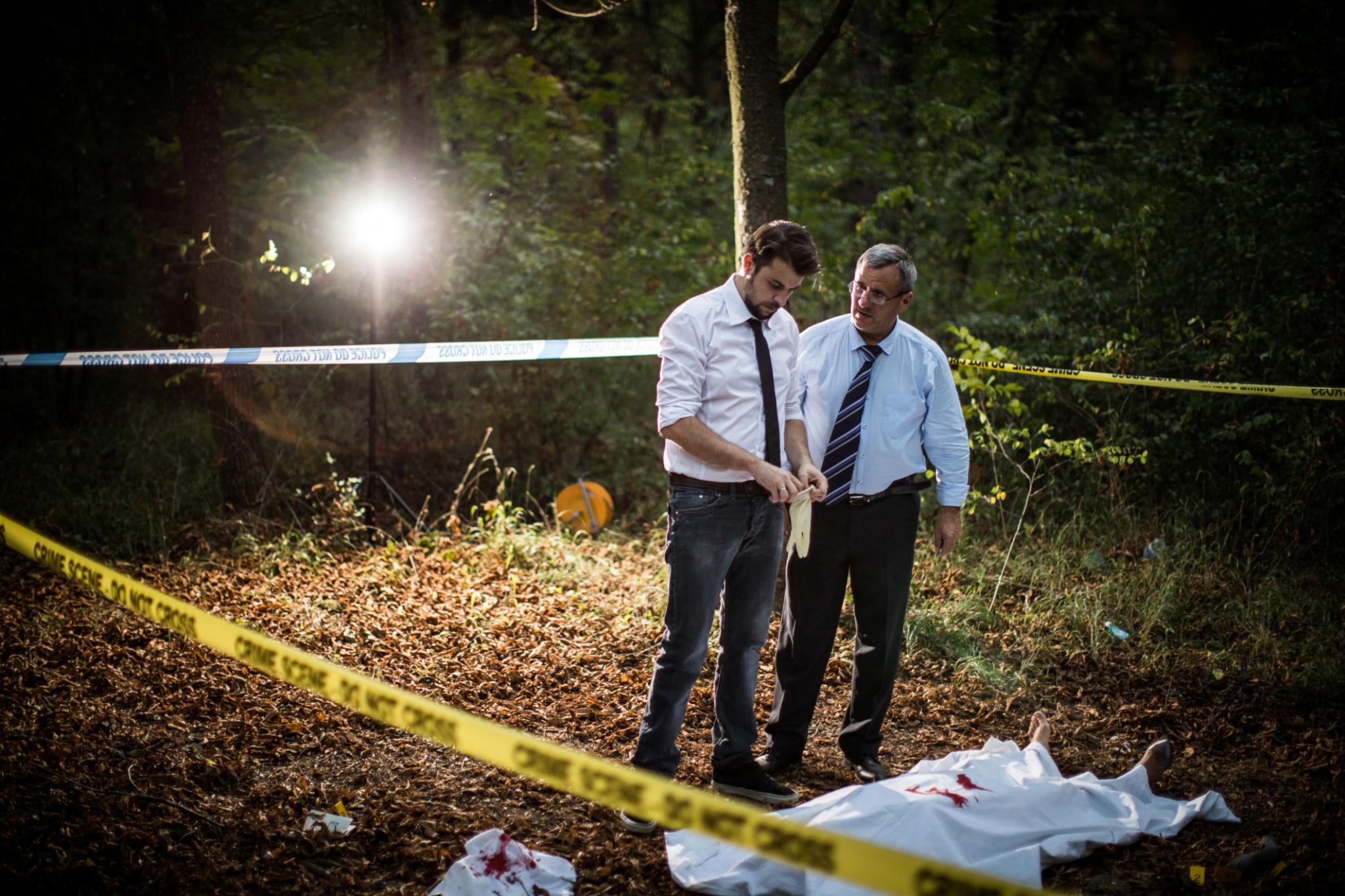
    Alt Text: Detectives gathering evidence at the original murder scene.

    Image 3 – Archived Cold Case Files

    Image
    Image
    Image
    Image
    Image
    Image

    Alt Text: Decades-old evidence preserved in a police archive.

    Image 4 – DNA Testing Laboratory

    Image
    Image
    Image

    Alt Text: Scientists analyzing DNA evidence from a decades-old homicide.

    Image 5 – Forensic Genealogy Research

    Image
    Image
    Image

    Alt Text: Researchers tracing family connections through DNA genealogy.

    Image 6 – Arrest After 39 Years

    Alt Text: Police arresting a suspect decades after the murder.

    Image 7 – Courthouse and Verdict

    Image
    Image
    Image
    Image
    Image
    Image

    Alt Text: Courthouse where justice was finally served after nearly four decades.
  • A 52-Year-Old Cold Case Was Finally Solved Thanks to One Forgotten Clue

    A 52-Year-Old Cold Case Was Finally Solved Thanks to One Forgotten Clue

    A 52-Year-Old Cold Case Was Finally Solved Thanks to One Forgotten Clue

    Image
    Image
    Image

    Cold Case Murder Solved After 52 Years: The Tiny Clue That Finally Unmasked a Killer

    For more than half a century, one brutal murder remained an unsolved mystery.

    The victim’s family spent decades wondering whether justice would ever arrive. Detectives came and went. Witnesses grew older. Newspaper headlines faded into history.

    Many people believed the killer had escaped forever.

    But one small piece of evidence preserved from the original crime scene had a different story to tell.

    For 52 years, it sat quietly inside a police evidence locker, waiting for science to catch up.

    When investigators finally reopened the case using modern forensic technology, they uncovered a truth that would shock an entire community and prove that even the oldest murder cases can still be solved.

    The Beginning of the Cold Case Murder

    In the spring of 1971, a 19-year-old woman left her evening job at a local diner and began the short drive home.

    She never arrived.

    Her family initially assumed she had stopped to visit friends or experienced car trouble.

    As the hours passed, concern quickly turned into panic.

    The following morning, police launched a missing-person investigation.

    Volunteers joined search efforts.

    Flyers were distributed throughout the community.

    Local radio stations interrupted programming to broadcast information about her disappearance.

    Residents searched roads, parks, rivers, and wooded areas.

    Several days later, searchers made a heartbreaking discovery.

    The young woman’s body was found in a remote location outside town.

    Investigators determined she had been murdered.

    The crime sent shockwaves through the community.

    Many residents had never experienced such a violent crime before.

    Fear spread rapidly.

    Parents became protective of their children.

    People avoided traveling alone after dark.

    The murder became the town’s most discussed topic.

    Detectives Launch a Massive Investigation

    Law enforcement agencies immediately assembled a team of detectives to investigate the homicide.

    The investigation became one of the largest in the area’s history.

    Hundreds of interviews were conducted.

    Friends, coworkers, family members, former classmates, and strangers were questioned.

    Investigators collected physical evidence from the crime scene.

    Fingerprints were gathered.

    Fibers were preserved.

    Hair samples were collected.

    Biological evidence was carefully stored.

    Detectives believed the killer would eventually make a mistake.

    Weeks turned into months.

    Months became years.

    Despite thousands of hours of investigative work, the case remained unsolved.

    Why the Murder Could Not Be Solved in the 1970s

    Today, DNA evidence is considered one of the most powerful tools in criminal investigations.

    However, during the early 1970s, DNA testing did not exist.

    Investigators relied heavily on witness testimony, fingerprints, and traditional detective work.

    Although biological evidence was collected from the crime scene, scientists lacked the technology necessary to analyze it properly.

    The evidence was preserved because investigators hoped future scientific advancements might reveal new information.

    That decision would eventually prove critical.

    Without it, the mystery may never have been solved.

    A Family Refuses to Give Up

    For the victim’s family, the pain never disappeared.

    Every birthday became a reminder of what had been lost.

    Every holiday felt incomplete.

    Each year brought renewed hope that someone would finally be held accountable.

    The family maintained contact with law enforcement for decades.

    Whenever new forensic techniques emerged, they encouraged authorities to review the case again.

    Their determination helped keep the investigation alive.

    Even after many original detectives retired, the family continued searching for answers.

    The Case Becomes a Cold Case

    As years passed, active leads disappeared.

    Potential suspects were investigated and eliminated.

    Witness memories faded.

    Evidence seemed exhausted.

    Eventually, the homicide officially became a cold case.

    Yet the investigation never truly ended.

    Inside police archives sat thousands of pages of reports, photographs, and forensic evidence.

    Every item remained preserved.

    Many investigators believed the case still had the potential to be solved someday.

    They simply needed better technology.

    Modern Science Reopens the Investigation

    More than fifty years later, a specialized cold-case unit reviewed unsolved murders from the 1970s.

    The case immediately stood out.

    Advances in forensic science had transformed criminal investigations worldwide.

    Cases once considered impossible were now being solved regularly.

    Detectives reopened the evidence boxes.

    Every item was carefully reexamined.

    Old reports were digitized.

    Photographs were enhanced.

    Witness statements were reviewed again.

    Most importantly, preserved biological evidence was submitted for advanced DNA analysis.

    The results exceeded expectations.

    The DNA Breakthrough

    Forensic scientists successfully extracted a complete DNA profile from evidence collected at the original crime scene.

    The achievement represented a major breakthrough.

    For the first time, investigators possessed genetic evidence connected directly to the killer.

    Excitement spread throughout the investigative team.

    The DNA profile was entered into national criminal databases.

    Detectives hoped for an immediate match.

    No match appeared.

    The suspect had apparently never provided DNA to law enforcement.

    While disappointing, investigators knew another option existed.

    A powerful technique known as forensic genealogy.

    Forensic Genealogy Changes Everything

    Forensic genealogy combines DNA science with family-history research.

    Instead of searching directly for a suspect, investigators search for relatives who share portions of the same DNA profile.

    Even distant cousins can provide important clues.

    A team of genealogists joined the investigation.

    Months of research followed.

    Birth records were examined.

    Marriage certificates were reviewed.

    Historical census records were analyzed.

    Obituaries provided additional family connections.

    Thousands of individuals were studied.

    Gradually, investigators narrowed the search.

    Eventually, they identified a specific family line connected to the unknown DNA profile.

    One man quickly became the focus of the investigation.

    The Suspect Nobody Expected

    The suspect had lived in the area during the early 1970s.

    Surprisingly, he had never become a major suspect.

    His name appeared only briefly in the original case files.

    At the time, detectives lacked evidence connecting him to the murder.

    Modern investigators discovered several important details.

    Employment records placed him near relevant locations.

    Witness statements suddenly appeared more significant.

    Historical timelines matched critical events in the investigation.

    The case against him continued growing stronger.

    Yet detectives still required direct confirmation.

    The Final Piece of Evidence

    Investigators quietly monitored the suspect.

    Eventually, they obtained an item he discarded in a public place.

    The object was sent to a forensic laboratory.

    Scientists extracted DNA and compared it with the profile recovered from the original crime-scene evidence.

    The results were definitive.

    The DNA matched.

    After 52 years, investigators finally identified the killer.

    A mystery that had haunted an entire community for generations suddenly had an answer.

    The Arrest

    Police officers arrived at the suspect’s home early one morning.

    The arrest occurred without incident.

    News spread quickly across television, radio, and social media.

    Residents were stunned.

    Many people had followed the case for decades.

    Others had never expected it to be solved.

    For the victim’s family, the arrest brought overwhelming emotions.

    Relief mixed with sadness.

    Closure mixed with grief.

    The truth had finally emerged, but the years lost could never be recovered.

    Justice in the Courtroom

    The trial attracted significant public attention.

    Prosecutors presented extensive forensic evidence.

    DNA experts explained how modern technology made identification possible.

    Genealogists described the family-tree research that helped locate the suspect.

    Detectives outlined every step of the renewed investigation.

    The defense attempted to challenge portions of the evidence.

    However, the scientific findings proved compelling.

    Jurors listened carefully as decades of mystery were finally explained.

    After deliberation, they reached a verdict.

    The suspect was found guilty.

    For the victim’s family, justice had finally arrived after more than half a century.

    Why More Cold Cases Are Being Solved Today

    Cases like this are becoming increasingly common.

    Across the United States and other countries, cold-case units are reopening investigations that once seemed impossible to solve.

    Modern DNA technology can recover genetic information from tiny samples collected decades ago.

    Forensic genealogy continues identifying suspects who managed to avoid detection for years.

    Investigators now possess tools that previous generations could only dream about.

    As technology continues advancing, experts believe thousands of additional cold cases may eventually be solved.

    Evidence once considered useless may hold the answers to long-forgotten mysteries.

    The Powerful Lesson Behind This Story

    The most remarkable aspect of this case is that the solution existed from the very beginning.

    The evidence was collected in 1971.

    It was preserved carefully.

    The only thing missing was the technology necessary to reveal the truth.

    For decades, the killer believed time was protecting him.

    He watched investigators retire.

    He watched newspaper coverage disappear.

    He assumed the case had been forgotten.

    But evidence does not forget.

    A tiny biological sample remained hidden inside an evidence box for more than five decades.

    When science finally caught up, the truth emerged.

    For families still waiting for answers in unsolved homicide cases, stories like this offer hope.

    Justice may take years.

    Sometimes it may take decades.

    But modern cold-case investigations continue proving one important fact:

    As long as evidence survives, the possibility of justice survives with it.

  • A Forgotten Case Was Reopened After 44 Years—And Investigators Made a Remarkable Discovery

    A Forgotten Case Was Reopened After 44 Years—And Investigators Made a Remarkable Discovery

    A Forgotten Case Was Reopened After 44 Years—And Investigators Made a Remarkable Discovery

    Image
    Image
    Image
    Image
    Image
    Image
    Image

    A Forgotten Case Was Reopened After 44 Years—And Investigators Made a Remarkable Discovery

    For more than four decades, the murder remained a mystery.

    The victim’s family waited for answers that never came. Detectives retired. Witnesses moved away. Newspaper headlines disappeared.

    Most people assumed the killer had gotten away with murder.

    Time seemed to be on his side.

    But hidden inside a police evidence room sat several boxes containing reports, photographs, and forensic samples collected many years earlier.

    What nobody realized was that the most important witness in the entire case had never spoken.

    It was a tiny piece of DNA.

    Forty-four years after the crime, that evidence would finally reveal the truth.

    And when it did, an entire community was stunned.


    A Young Woman Vanishes

    In September 1978, a 24-year-old woman finished her evening shift at a local restaurant and started driving home.

    Friends described her as responsible and dependable.

    When she failed to arrive home that night, her family became worried almost immediately.

    Calls to friends produced no answers.

    Hospitals reported no accidents involving her vehicle.

    By the following morning, a missing-person investigation had begun.

    Police officers searched roads and parking lots.

    Volunteers distributed flyers.

    Local radio stations broadcast appeals for information.

    Residents hoped she would be found safe.

    Instead, several days later, searchers discovered her abandoned vehicle.

    The discovery increased fears that something terrible had happened.

    A large-scale search operation was organized.

    Then came the devastating news.

    The young woman’s body was found in a wooded area several miles from town.

    Investigators determined she had been murdered.

    The community was shocked.

    Violent crimes were rare in the area, and many residents struggled to understand how such a tragedy could occur.

    Fear spread rapidly.

    Parents warned children not to walk alone.

    Businesses adjusted operating hours.

    For months, the crime dominated local conversations.


    The Search for Answers

    Police immediately launched a major homicide investigation.

    Detectives interviewed hundreds of people.

    Coworkers, neighbors, former classmates, and family members were questioned.

    Potential suspects were identified and investigated.

    Every lead was pursued.

    Crime-scene investigators collected everything they could find.

    Photographs were taken.

    Fibers were gathered.

    Tire tracks were documented.

    Biological evidence was carefully preserved.

    At the time, detectives believed the evidence would eventually lead them to the killer.

    Unfortunately, forensic technology in 1978 was far less advanced than today.

    DNA testing did not exist.

    Many scientific techniques now considered routine had not yet been developed.

    Investigators relied primarily on witness testimony and traditional detective work.

    Months passed without a breakthrough.

    Eventually, the investigation stalled.


    A Family’s Long Wait

    For the victim’s family, life never returned to normal.

    Birthdays became painful reminders.

    Holiday gatherings felt incomplete.

    Every year brought the same unanswered question:

    Who killed her?

    The family maintained regular contact with investigators.

    Whenever a new detective took over the case, they hoped fresh eyes might uncover something previously overlooked.

    Occasionally, tips arrived.

    Some appeared promising.

    None resulted in an arrest.

    As the years passed, the case officially became a cold case.

    Yet the family never gave up hope.

    Neither did some investigators.


    Evidence Preserved for the Future

    One of the most important decisions made during the original investigation involved evidence preservation.

    Instead of discarding items that seemed unhelpful, detectives carefully stored everything.

    Boxes of documents were archived.

    Photographs were protected.

    Biological samples were sealed and preserved.

    At the time, nobody knew how important those decisions would become.

    Investigators simply believed future technologies might offer new opportunities.

    They were right.


    A New Generation of Detectives

    By 2022, cold-case units across the United States were solving crimes that had remained mysteries for decades.

    Advances in forensic science had transformed criminal investigations.

    Cases once considered impossible were suddenly being solved.

    A newly assigned detective reviewed the 1978 murder file.

    The investigation immediately caught his attention.

    Several pieces of biological evidence collected from the original crime scene appeared suitable for modern DNA testing.

    The evidence was submitted to a specialized forensic laboratory.

    Weeks later, investigators received exciting news.

    Scientists had successfully recovered a DNA profile.

    For the first time, detectives possessed genetic evidence linked directly to the killer.


    The First Major Breakthrough

    The DNA profile was entered into national law-enforcement databases.

    Investigators hoped the suspect had previously been arrested for another crime.

    A match would immediately identify the killer.

    No match appeared.

    The suspect was not in the system.

    At first, the discovery seemed disappointing.

    But detectives understood that modern investigations had another powerful tool available.

    Forensic genealogy.

    The same technology responsible for solving numerous cold cases across the country could potentially help identify their suspect.

    The investigation moved into a new phase.


    Building a Family Tree

    Forensic genealogy combines DNA science with traditional ancestry research.

    Rather than searching directly for the suspect, investigators search for relatives who share portions of the same genetic profile.

    Genealogists began examining records.

    Marriage certificates.

    Birth records.

    Obituaries.

    Census documents.

    Military records.

    Thousands of names were reviewed.

    The process required months of patience.

    Family trees expanded across multiple generations.

    Branches were eliminated one by one.

    Eventually, investigators narrowed their search to a small group of individuals.

    One name stood out.


    The Man Nobody Remembered

    The suspect had lived in the area in 1978.

    Yet he had never become a major focus of the original investigation.

    His name appeared only briefly within old police records.

    At the time, there was no evidence connecting him to the murder.

    Now everything looked different.

    Investigators examined employment records.

    They reviewed historical addresses.

    Old witness statements were reanalyzed.

    Several details suddenly became significant.

    The suspect’s movements matched important events in the investigation.

    Locations connected to him aligned with evidence recovered decades earlier.

    The case against him continued growing stronger.

    Still, detectives needed one final piece of proof.


    Obtaining Confirmation

    Investigators quietly monitored the suspect.

    Their goal was obtaining a direct DNA sample.

    Eventually, they recovered an item discarded in a public place.

    The object was submitted for forensic analysis.

    Scientists extracted DNA and compared it with the profile recovered from the original crime-scene evidence.

    The results were definitive.

    The samples matched.

    After forty-four years, investigators finally knew who had committed the murder.

    The revelation shocked everyone involved.

    A mystery that had survived nearly half a century suddenly had an answer.


    The Arrest

    Police officers arrived at the suspect’s residence early one morning.

    He was taken into custody without incident.

    News of the arrest spread rapidly throughout the community.

    Television stations covered the story extensively.

    Former investigators expressed amazement.

    Residents who remembered the original crime could hardly believe the case had finally been solved.

    For the victim’s family, emotions were overwhelming.

    Some cried.

    Others expressed gratitude.

    Many described feeling relief for the first time in decades.

    The person responsible would finally face justice.


    The Trial

    The courtroom was filled during the trial.

    Journalists, family members, and members of the public attended proceedings.

    Prosecutors presented a detailed timeline of the investigation.

    DNA experts explained how modern technology made identification possible.

    Genealogists described the research that connected the suspect to the crime.

    Detectives outlined every step taken during the renewed investigation.

    The defense challenged aspects of the case.

    However, the scientific evidence proved compelling.

    Jurors listened carefully.

    They reviewed decades of evidence and testimony.

    After deliberating, they reached a verdict.

    The suspect was found guilty.

    At last, justice had arrived.


    Why Cold Cases Are Being Solved Today

    Cases like this are becoming increasingly common.

    Across the country, law-enforcement agencies are revisiting unsolved homicides from previous decades.

    Modern DNA testing can recover information from extremely small biological samples.

    Evidence once considered useless can now reveal critical clues.

    Forensic genealogy has revolutionized investigations by identifying suspects through distant relatives.

    As a result, criminals who believed they escaped justice are being identified years later.

    Thousands of cold cases remain open.

    Many contain evidence that has never been examined using today’s technology.

    Investigators believe countless additional breakthroughs are still waiting to happen.


    A Lesson About Time and Justice

    The most remarkable aspect of this story is that the solution existed from the beginning.

    The evidence was collected in 1978.

    It was carefully preserved.

    What investigators lacked was the technology needed to interpret it.

    For decades, the killer believed time would protect him.

    He watched years pass.

    He watched public attention disappear.

    He assumed the case had been forgotten.

    But evidence has a remarkable memory.

    A tiny biological sample waited patiently inside an evidence box.

    Science advanced.

    Detectives kept searching.

    Eventually, the truth emerged.


    Hope for Other Families

    Thousands of families continue waiting for answers in unsolved murder investigations.

    Many have spent decades wondering whether justice will ever arrive.

    Stories like this provide hope.

    Every preserved piece of evidence represents possibility.

    Every scientific advancement creates opportunity.

    Every detective who reopens an old file increases the chance that a mystery can be solved.

    For this family, the wait lasted forty-four years.

    For others, it may be longer.

    But modern forensic science continues proving an important truth:

    A murder case is never truly over until every lead has been exhausted.

    And sometimes, even after decades have passed, the evidence is still waiting to tell its story.


  • A 1972 Cold Case Remained Unsolved for 51 Years Until DNA Technology Uncovered the Truth

    A 1972 Cold Case Remained Unsolved for 51 Years Until DNA Technology Uncovered the Truth

    Image
    Image
    Image

    A 1972 Cold Case Remained Unsolved for 51 Years Until DNA Technology Uncovered the Truth

    Some murder cases disappear from the headlines within days.

    Others refuse to be forgotten.

    This is the story of a homicide that remained unsolved for more than half a century—a case that haunted investigators, devastated a family, and left a community searching for answers.

    For 51 years, the identity of the killer remained a mystery.

    Witnesses came and went.

    Detectives retired.

    Leads dried up.

    Yet one tiny piece of evidence survived.

    Locked away inside a police evidence room, it waited for science to catch up.

    When that moment finally arrived, one of the longest-running mysteries in local history was finally solved.

    A Normal Day That Ended in Tragedy

    In the summer of 1972, a 23-year-old woman finished work and headed home.

    Friends later described her as kind, hardworking, and well-liked throughout the community.

    Nothing about that day appeared unusual.

    She followed her normal routine.

    She planned to meet family members later that evening.

    But she never arrived.

    When relatives were unable to contact her, concern quickly spread.

    At first, family members believed she may have experienced car trouble or decided to visit friends unexpectedly.

    As the hours passed, that explanation became less believable.

    Police received a missing-person report and immediately began searching.

    Volunteers joined the effort.

    Local newspapers printed photographs.

    Community members searched roads, fields, and wooded areas.

    Days later, the search ended with a devastating discovery.

    The young woman’s body was found in a remote area several miles from town.

    Investigators quickly determined she had been murdered.

    The crime shocked residents.

    Many had never experienced such violence within their community.

    Fear replaced normal life almost overnight.

    The Investigation Begins

    Detectives launched an extensive homicide investigation.

    Hundreds of interviews were conducted.

    Friends, coworkers, neighbors, and relatives were questioned.

    Police received countless tips.

    Some witnesses reported suspicious vehicles.

    Others described unfamiliar individuals seen near the area.

    Every lead was investigated.

    At the crime scene, detectives collected all available evidence.

    Among the materials recovered were fibers, fingerprints, tire impressions, and biological samples.

    Investigators hoped these clues would eventually identify the killer.

    Unfortunately, forensic science in 1972 had significant limitations.

    DNA testing did not exist.

    Many of today’s investigative technologies had not yet been developed.

    Although detectives worked tirelessly, the case remained unsolved.

    Months Become Years

    As months passed, investigators continued searching for answers.

    New suspects emerged.

    Old suspects were eliminated.

    Several individuals were questioned repeatedly.

    Yet none could be connected conclusively to the crime.

    Eventually, the investigation slowed.

    The case entered what law enforcement calls “cold case” status.

    A cold case does not mean an investigation has ended.

    It simply means active leads have been exhausted.

    For the victim’s family, however, the distinction offered little comfort.

    Birthdays came and went.

    Holidays passed.

    Anniversaries became painful reminders of unanswered questions.

    Who committed the murder?

    Would justice ever arrive?

    The Evidence Is Preserved

    One decision made during the original investigation would later prove critical.

    Instead of discarding evidence that appeared unhelpful, detectives carefully preserved everything.

    Boxes containing reports, photographs, witness statements, and forensic samples were placed into storage.

    At the time, nobody could predict future scientific advancements.

    Yet investigators understood that technology evolves.

    Perhaps one day new tools would reveal information unavailable in 1972.

    That decision ultimately changed everything.

    A New Generation Takes Over

    More than five decades later, a newly established cold-case unit reviewed unsolved homicides from previous decades.

    The 1972 murder quickly attracted attention.

    Advances in forensic science had transformed criminal investigations across the country.

    Cases once considered impossible were suddenly being solved.

    Investigators began examining old evidence.

    Thousands of pages of reports were digitized.

    Witness statements were reanalyzed.

    Crime-scene photographs were enhanced using modern technology.

    Most importantly, preserved biological evidence was submitted for advanced DNA testing.

    The results exceeded expectations.

    Science Unlocks a Secret

    Forensic scientists successfully extracted a DNA profile from evidence collected in 1972.

    The breakthrough represented a historic moment for the investigation.

    For the first time, detectives possessed a genetic signature connected to the killer.

    The DNA profile was entered into national law-enforcement databases.

    Investigators hoped the suspect’s identity would immediately appear.

    No match was found.

    The disappointment was significant.

    However, detectives now had another powerful tool at their disposal.

    Forensic genealogy.

    A Revolutionary Technique

    Forensic genealogy combines genetic science with traditional family-history research.

    Instead of searching directly for a suspect, investigators search for relatives who share portions of the same DNA.

    Even distant relatives can provide valuable clues.

    Genealogists joined the investigation.

    Months of research followed.

    Birth records were reviewed.

    Marriage certificates were examined.

    Obituaries were analyzed.

    Historical census records provided additional information.

    Family trees expanded across multiple generations.

    Thousands of individuals were evaluated.

    Slowly, investigators narrowed their search.

    Eventually, they identified a specific family line connected to the unknown DNA profile.

    One individual quickly emerged as a strong suspect.

    The Man Nobody Suspected

    The suspect had lived near the victim during the early 1970s.

    Surprisingly, he had never been considered a major suspect.

    His name appeared only briefly within original investigative records.

    At the time, detectives lacked evidence linking him to the crime.

    The DNA findings changed everything.

    Investigators examined his history.

    Employment records placed him near relevant locations.

    Witness statements that once seemed insignificant suddenly gained importance.

    Several previously overlooked details aligned perfectly with the timeline of the murder.

    The case against him grew stronger.

    Yet detectives still required definitive proof.

    Gathering Confirmation

    Investigators quietly monitored the suspect.

    Their goal was obtaining a direct DNA sample without alerting him.

    Eventually, detectives recovered an item discarded in a public location.

    The object was sent to a forensic laboratory.

    Scientists extracted DNA and compared it with the profile recovered from the crime-scene evidence.

    The results were conclusive.

    The DNA matched.

    After 51 years, investigators finally identified the killer.

    The case that had remained unsolved for more than half a century suddenly had an answer.

    The Arrest

    Police officers executed an arrest warrant early one morning.

    The suspect, now elderly, was taken into custody.

    News of the arrest spread rapidly.

    Television stations interrupted programming.

    Newspapers published special reports.

    Many residents could not believe the case had finally been solved.

    Some had followed the investigation for decades.

    Others had assumed justice would never arrive.

    For the victim’s family, emotions were overwhelming.

    Relief mixed with sadness.

    Closure mixed with grief.

    The years lost could never be recovered.

    But the truth had finally emerged.

    Inside the Courtroom

    The trial attracted significant public attention.

    Prosecutors presented extensive forensic evidence.

    DNA experts explained how technology had evolved since 1972.

    Genealogists described the family-tree research that led investigators to the suspect.

    Detectives outlined every step of the modern investigation.

    The defense challenged portions of the evidence.

    However, the DNA findings proved difficult to dispute.

    Jurors listened as decades of mystery unfolded before them.

    The evidence painted a clear picture.

    After deliberation, the jury reached its verdict.

    The suspect was found guilty.

    Justice had finally arrived.

    Why Cold Cases Are Being Solved More Often

    Cases like this are becoming increasingly common.

    Across the United States, cold-case units are reopening investigations once considered impossible to solve.

    Modern DNA analysis can recover information from evidence collected decades ago.

    Forensic genealogy has created entirely new investigative pathways.

    Even small biological samples can now reveal valuable clues.

    As technology continues improving, experts believe thousands of additional cold cases may eventually be solved.

    Evidence once thought useless is becoming more valuable every year.

    The Lesson Hidden Inside an Evidence Box

    Perhaps the most remarkable aspect of this story is that the solution existed from the beginning.

    The evidence was collected in 1972.

    Investigators preserved it carefully.

    What they lacked was the technology necessary to unlock its secrets.

    For decades, the killer believed time would protect him.

    He watched investigators retire.

    He watched headlines disappear.

    He assumed the case had been forgotten.

    He was wrong.

    The evidence waited patiently.

    Science advanced.

    Investigators continued searching.

    Eventually, the truth emerged.

    A Message for Families Still Waiting

    Thousands of families across the country continue waiting for answers in unsolved homicide cases.

    Many have spent decades hoping for a breakthrough.

    Stories like this provide something extremely important.

    Hope.

    Every preserved piece of evidence represents a possibility.

    Every technological advancement creates new opportunities.

    Every cold-case detective who reopens an old file increases the chance that justice will eventually arrive.

    For this victim’s family, that moment came after 51 long years.

    The killer believed he had escaped forever.

    Instead, a tiny DNA sample became the witness that finally spoke.

    And when it did, it changed everything.

    The case serves as a powerful reminder that justice may move slowly, but it can still arrive—even after half a century has passed.

  • The Killer Thought the Case Was Dead: 36 Years Later, Detectives Uncovered the One Clue That Changed Everything

    The Killer Thought the Case Was Dead: 36 Years Later, Detectives Uncovered the One Clue That Changed Everything

    The Killer Thought the Case Was Dead: 36 Years Later, Detectives Uncovered the One Clue That Changed Everything

    Image
    Image
    Image
    Image

    The Killer Thought the Case Was Dead: 36 Years Later, Detectives Uncovered the One Clue That Changed Everything

    For decades, the murder file sat untouched inside a police evidence room.

    The case had once dominated local headlines. Detectives spent years chasing leads, interviewing witnesses, and searching for a suspect. Yet despite their efforts, the killer remained unidentified.

    As time passed, many people assumed the truth would never be discovered.

    The victim’s family endured years of uncertainty.

    Investigators retired.

    Witnesses moved away.

    Memories faded.

    But hidden among thousands of pages of reports was a clue that had never fully revealed its importance.

    Thirty-six years after the crime, that clue finally helped solve the mystery.

    A Disappearance No One Could Explain

    In October 1987, a 29-year-old woman disappeared while driving home after meeting friends.

    She was expected home later that evening but never arrived.

    Concern spread quickly among family members.

    Phone calls went unanswered.

    Friends had no information.

    The following day, police officially began searching for her.

    Volunteers joined search teams.

    Local media covered the disappearance extensively.

    Residents hoped she would be found alive.

    Several days later, those hopes ended.

    Her body was discovered in a wooded area miles from where she had last been seen.

    Investigators confirmed she had been murdered.

    The quiet community was stunned.

    The Hunt for a Killer

    Police immediately launched a homicide investigation.

    Detectives interviewed hundreds of people connected to the victim.

    Coworkers, neighbors, former classmates, relatives, and acquaintances were questioned.

    Potential suspects were identified and investigated.

    Crime-scene technicians collected every piece of evidence they could locate.

    Among the evidence were fibers, fingerprints, tire impressions, and biological material.

    At the time, forensic science offered only limited tools.

    DNA testing was still developing and unavailable for many criminal investigations.

    As a result, investigators could not fully analyze all the evidence they recovered.

    Months of investigative work failed to identify the killer.

    The case gradually stalled.

    Years of Silence

    The victim’s family never stopped searching for answers.

    Every anniversary served as a painful reminder of what had happened.

    Local newspapers occasionally published stories about the unsolved murder.

    Detectives periodically reviewed the case.

    New tips arrived from time to time.

    Unfortunately, none produced significant breakthroughs.

    The investigation officially became a cold case.

    Still, police preserved all evidence collected during the original inquiry.

    That decision would eventually make all the difference.

    A Fresh Look at Old Evidence

    More than three decades later, a cold-case unit reopened the investigation.

    Advances in forensic science had transformed homicide investigations across the country.

    Evidence once considered impossible to analyze could now be examined using sophisticated technology.

    Detectives reviewed every detail from the original case.

    During the review, investigators focused on a biological sample collected near the victim’s body.

    In 1987, scientists could not obtain meaningful results from the material.

    Modern laboratories, however, possessed much more advanced capabilities.

    The sample was sent for testing.

    What happened next shocked investigators.

    The Discovery

    Forensic scientists successfully extracted a complete DNA profile.

    The evidence had survived for 36 years.

    Suddenly, detectives possessed something they had never had before: a genetic signature connected to the killer.

    The profile was entered into criminal databases.

    Investigators hoped for an immediate match.

    None appeared.

    The suspect had likely never been required to submit DNA to law enforcement.

    At first, the development seemed frustrating.

    Yet detectives knew another option existed.

    A Revolutionary Tool

    Forensic genealogy has become one of the most important breakthroughs in modern criminal investigations.

    Instead of searching directly for a suspect, investigators identify relatives who share portions of the same DNA.

    Genealogists joined the investigation.

    Thousands of records were examined.

    Birth certificates.

    Marriage records.

    Obituaries.

    Historical census information.

    Public databases.

    The process required patience and precision.

    Gradually, a large family tree emerged.

    Investigators narrowed the possibilities until only a handful of individuals remained.

    One man quickly attracted attention.

    An Unexpected Suspect

    The suspect had lived in the area during the late 1980s.

    Yet he had never been considered a major suspect.

    His name appeared only briefly in the original case file.

    At the time, detectives lacked evidence connecting him to the crime.

    The DNA findings changed everything.

    Investigators reviewed old witness statements.

    Employment records.

    Property documents.

    Travel histories.

    Several previously overlooked details suddenly became significant.

    The suspect appeared increasingly connected to locations relevant to the murder.

    Detectives believed they were getting close.

    The Breakthrough

    Investigators needed confirmation.

    DNA evidence from the suspect would provide the final answer.

    After obtaining a discarded item linked to him, forensic scientists performed additional testing.

    The results were definitive.

    The DNA matched the profile recovered from the crime scene.

    After 36 years, investigators finally identified the killer.

    The discovery marked one of the most important breakthroughs in the department’s history.

    The Arrest

    Police officers arrested the suspect at his home.

    News of the arrest spread rapidly.

    Many residents were stunned.

    Some had forgotten the case entirely.

    Others had spent decades wondering whether it would ever be solved.

    For the victim’s family, the arrest triggered powerful emotions.

    Relief.

    Sadness.

    Gratitude.

    Anger.

    After so many years, the truth had finally emerged.

    The person responsible would finally face justice.

    Inside the Trial

    The prosecution relied heavily on forensic evidence.

    Experts explained how DNA technology had advanced since the 1980s.

    Genealogists described the family-tree research that led detectives to the suspect.

    Investigators detailed the process of reopening the case and reviewing old evidence.

    The defense attempted to challenge parts of the investigation.

    However, the scientific evidence proved difficult to dispute.

    Jurors listened as decades of unanswered questions were finally addressed.

    After deliberation, they reached their decision.

    The suspect was found guilty.

    The victim’s family finally received the justice they had sought for more than three decades.

    Why Cold Cases Are Being Solved Today

    This case is part of a growing trend.

    Across the United States, cold-case investigators are solving crimes once considered impossible to crack.

    Modern DNA testing can analyze evidence far more effectively than earlier generations of technology.

    Forensic genealogy has opened entirely new investigative pathways.

    Preserved evidence from decades-old crimes is producing breakthroughs every year.

    Thousands of unsolved homicides remain under active review.

    Experts believe many more will be solved in the future.

    A Lesson Hidden in an Evidence Box

    The most remarkable part of this story is how close the solution remained all along.

    The evidence existed from the very beginning.

    Investigators collected it in 1987.

    They preserved it carefully.

    What they lacked was the technology needed to unlock its secrets.

    Thirty-six years later, science provided the answer.

    The killer believed the case had been forgotten.

    He assumed the passage of time would protect him.

    Instead, time became his enemy.

    As technology improved, the evidence grew stronger.

    The truth emerged.

    And justice finally arrived.

    For families waiting for answers in unsolved homicide cases, stories like this offer hope.

    No matter how many years pass, a cold case can still be solved.

    Sometimes all it takes is one clue, one detective willing to take another look, and one scientific breakthrough capable of revealing what has remained hidden for decades.

    Additional Article Images

    Image 1 – Missing Person Search

    Image
    Image
    Image

    Alt Text: Search teams looking for clues after a woman disappeared.

    Image 2 – Crime Scene Investigation

    Image
    Image
    Image

    Alt Text: Investigators processing a homicide scene during the original investigation.

    Image 3 – Cold Case Archive

    Image
    Image
    Image

    Alt Text: Detectives reviewing evidence from a decades-old murder case.

    Image 4 – DNA Testing Laboratory

    Image
    Image
    Image
    Image
    Image
    Image

    Alt Text: Scientists examining DNA evidence using modern forensic technology.

    Image 5 – Genealogy Investigation

    Image
    Image
    Image

    Alt Text: Genealogists tracing family connections to identify a suspect.

    Image 6 – Arrest of the Suspect

    Image
    Image
    Image

    Alt Text: Suspect arrested decades after the murder occurred.

    Image 7 – Courthouse and Justice

    Image
    Image
    Image
    Image
    Image
    Image
    Image

    Alt Text: Courthouse where the cold-case murder finally reached a verdict.

  • He Escaped Justice for 41 Years—Until Detectives Reopened One Forgotten Murder File

    He Escaped Justice for 41 Years—Until Detectives Reopened One Forgotten Murder File

    He Escaped Justice for 41 Years—Until Detectives Reopened One Forgotten Murder File

    Image
    Image
    Image
    Image
    Image
    Image
    Image

    He Escaped Justice for 41 Years—Until Detectives Reopened One Forgotten Murder File

    For more than four decades, a killer believed he had escaped justice.

    The investigation had stalled. Witnesses had disappeared. Detectives had retired. The crime had faded from newspaper headlines and public memory.

    To most people, the case seemed destined to remain unsolved forever.

    But hidden inside a police evidence room was a collection of clues waiting for the future.

    When a team of cold-case investigators reopened the file 41 years later, they uncovered a trail that would eventually lead them to a shocking truth.

    The case became another powerful reminder that even after decades have passed, murder investigations are never truly over.

    A Summer Night Ends in Tragedy

    The story began in July 1982.

    A 27-year-old woman left work shortly after sunset and started the drive home.

    She never arrived.

    When family members were unable to reach her, concern quickly grew.

    Friends contacted local police.

    At first, investigators treated the situation as a missing-person case.

    Officers searched nearby roads and questioned friends, coworkers, and relatives.

    Days later, the search ended in heartbreak.

    The woman’s body was discovered in a remote rural area outside the city.

    Investigators quickly determined that she had been murdered.

    The crime shocked the community.

    Violent crimes were uncommon in the region, and residents struggled to understand how such a tragedy could occur.

    Fear spread throughout the area as police searched for answers.

    The Massive Investigation

    The homicide investigation became one of the largest in local history.

    Detectives interviewed hundreds of witnesses.

    They followed thousands of tips.

    Potential suspects were identified and questioned.

    Crime-scene technicians carefully collected evidence, including fingerprints, fibers, hairs, and biological material.

    Every lead appeared promising at first.

    Yet one by one, they collapsed.

    Investigators worked tirelessly for months.

    Despite their efforts, they could not identify the killer.

    The case slowly grew colder.

    Years passed.

    No arrests were made.

    The victim’s family continued waiting for answers.

    The Case Becomes a Cold Case

    By the early 1990s, active investigative leads had nearly disappeared.

    The murder officially became a cold case.

    Although the investigation remained open, there were no obvious suspects and no significant new evidence.

    For many families, this is the most difficult stage of a homicide investigation.

    Hope begins to fade.

    The public moves on.

    Media attention disappears.

    Yet investigators refused to close the file completely.

    Evidence remained carefully stored.

    Photographs were preserved.

    Witness statements were archived.

    Detectives understood that future advances in forensic science might one day provide answers.

    That decision would prove critical.

    A New Generation Takes Over

    Forty-one years after the murder, a newly formed cold-case unit reviewed hundreds of unsolved homicides.

    Among the files was the forgotten 1982 murder.

    A detective assigned to the case noticed something important.

    Several pieces of biological evidence collected at the crime scene had never undergone modern DNA analysis.

    The evidence had been tested decades earlier, but technology at the time was extremely limited.

    Today’s laboratories could perform far more advanced examinations.

    The detective requested new testing.

    The results exceeded everyone’s expectations.

    A DNA Profile Emerges

    Forensic scientists successfully extracted a complete DNA profile from evidence collected during the original investigation.

    The achievement represented a major breakthrough.

    For decades, detectives had possessed evidence but lacked the technology necessary to unlock its secrets.

    Now they finally had a genetic profile connected to the killer.

    Investigators entered the DNA profile into national databases.

    No direct match appeared.

    The suspect had apparently never provided DNA to law enforcement.

    At first, the development seemed disappointing.

    However, another powerful investigative tool had recently emerged.

    The Genealogy Connection

    Forensic genealogy has revolutionized criminal investigations across the United States.

    Instead of searching for the suspect directly, investigators search for relatives who share portions of the same DNA.

    Genealogists began constructing family trees linked to the unknown profile.

    The process required extensive research.

    Birth records.

    Marriage certificates.

    Obituaries.

    Historical census documents.

    Public databases.

    Thousands of names were reviewed.

    Months of work gradually narrowed the field.

    Eventually, investigators identified a family line connected to the DNA evidence.

    One individual quickly became the primary suspect.

    The Man Nobody Suspected

    The suspect had lived within driving distance of the victim in 1982.

    Yet his name had never appeared prominently in the original investigation.

    At the time, there had been no reason to focus on him.

    The DNA evidence changed everything.

    Detectives examined his background.

    Employment records placed him near locations connected to the case.

    Historical documents revealed several previously unnoticed links.

    Witness statements from decades earlier suddenly appeared far more significant.

    Piece by piece, investigators rebuilt the case.

    The evidence pointed toward a single conclusion.

    The Final Test

    Detectives still required confirmation.

    They needed a direct DNA sample from the suspect.

    Investigators quietly conducted surveillance and eventually obtained an item he discarded in a public location.

    The object was submitted to a forensic laboratory.

    Scientists compared the DNA sample with the genetic profile recovered from the original crime-scene evidence.

    The results were conclusive.

    The profiles matched.

    After 41 years, investigators finally knew who had committed the murder.

    The breakthrough stunned everyone involved.

    A mystery that had haunted investigators for decades was finally solved.

    The Arrest

    Police officers arrested the suspect at his residence.

    The arrest generated national headlines.

    Many people could not believe a murder committed more than four decades earlier had finally been solved.

    Television news programs highlighted the role of DNA technology and forensic genealogy.

    For the victim’s family, the arrest represented a moment they had almost stopped imagining.

    Some relatives described feeling relief for the first time in decades.

    Others said the arrest reopened painful memories while also providing long-awaited closure.

    The emotions were complex.

    But one fact was undeniable.

    The truth had finally emerged.

    Justice Arrives

    During the trial, prosecutors presented extensive forensic evidence.

    Experts explained how DNA technology had evolved since the early 1980s.

    Genealogists described the family-tree research that led investigators to the suspect.

    Detectives reconstructed the investigation from beginning to end.

    Jurors listened as decades of unanswered questions were finally resolved.

    The defense challenged aspects of the evidence but struggled to overcome the scientific findings.

    After reviewing all testimony, the jury returned a guilty verdict.

    The victim’s family finally received the justice they had sought for more than forty years.

    Why Cold Cases Are Being Solved More Often

    Cases like this are no longer rare.

    Across the country, law-enforcement agencies are reopening old homicide investigations.

    Evidence once considered useless is producing new DNA profiles.

    Forensic genealogy is helping identify suspects who managed to avoid detection for decades.

    Thousands of unsolved murders remain under active review.

    Many contain preserved evidence that modern technology can analyze more effectively than ever before.

    Experts believe numerous cold cases will be solved during the coming years.

    The passage of time no longer guarantees safety for criminals.

    The Legacy of One Forgotten File

    The most remarkable part of this story is not the arrest.

    It is the fact that investigators never stopped believing the case could be solved.

    A forgotten file sat in storage for decades.

    An evidence box remained untouched.

    A biological sample waited patiently for science to catch up.

    Eventually, it did.

    For 41 years, the killer believed he had escaped accountability.

    He watched time pass and assumed the investigation was over.

    He was wrong.

    The evidence never forgot.

    The victim’s family never stopped hoping.

    And detectives never completely gave up.

    In the end, those three things changed everything.

    The case serves as a powerful reminder that justice does not always arrive quickly.

    Sometimes it takes decades.

    But as modern cold-case investigations continue proving, it is never too late for the truth to come to light.

    Additional Article Images

    Image 1 – Missing Person Investigation

    Image
    Image
    Image

    Alt Text: Search teams looking for a missing woman shortly after her disappearance.

    Image 2 – Crime Scene

    Image
    Image
    Image
    Image
    Image
    Image
    Image

    Alt Text: Investigators gathering evidence at the scene of a homicide.

    Image 3 – Cold Case Files

    Image
    Image
    Image
    Image
    Image
    Image

    Alt Text: Archived homicide files being reviewed decades after the crime.

    Image 4 – DNA Analysis

    Image
    Image
    Image
    Image
    Image
    Image

    Alt Text: Forensic scientists analyzing DNA evidence from a cold case.

    Image 5 – Genealogy Research

    Image
    Image
    Image
    Image
    Image
    Image

    Alt Text: Genealogists building family trees to identify a suspect.

    Image 6 – Arrest

    Image
    Image
    Image
    Image
    Image
    Image

    Alt Text: Police arresting a suspect decades after the murder occurred.

    Image 7 – Courthouse

    Image
    Image
    Image

    Alt Text: Courthouse where the cold-case murder finally reached a verdict.

  • The Murderer Waited 47 Years for This Knock on the Door: How Detectives Finally Solved a Forgotten Cold Case

    The Murderer Waited 47 Years for This Knock on the Door: How Detectives Finally Solved a Forgotten Cold Case

    The Murderer Waited 47 Years for This Knock on the Door: How Detectives Finally Solved a Forgotten Cold Case

    Image
    Image
    Image
    Image
    Image

    The Murderer Waited 47 Years for This Knock on the Door: How Detectives Finally Solved a Forgotten Cold Case

    For nearly half a century, the case sat quietly inside a police archive.

    Dust gathered on evidence boxes.

    Witnesses grew older.

    Detectives retired.

    Many people assumed the truth would never be discovered.

    But one thing remained unchanged.

    The victim still deserved justice.

    In the end, a combination of persistence, science, and modern investigative techniques succeeded where decades of traditional detective work had failed.

    The result was one of the most remarkable cold-case breakthroughs in recent history.

    A Disappearance That Terrified a Community

    It was the summer of 1976 when a young woman vanished after leaving her workplace in a small American city.

    Her family expected her home that evening.

    When she failed to arrive, concern quickly spread.

    Friends contacted police.

    Coworkers were interviewed.

    Search efforts began almost immediately.

    At first, investigators hoped she had simply experienced car trouble or chosen to stay elsewhere overnight.

    Those hopes disappeared days later.

    Searchers discovered her body in a remote area several miles outside the city.

    The young woman had been murdered.

    News of the crime spread rapidly through the community.

    Residents were horrified.

    Parents warned their children not to walk alone.

    Businesses began closing earlier.

    Fear replaced the sense of safety people once felt.

    The Original Investigation

    Law-enforcement agencies launched a major homicide investigation.

    Detectives worked around the clock.

    Hundreds of interviews were conducted.

    Potential suspects were identified and questioned.

    Witnesses reported suspicious vehicles and unfamiliar individuals seen near the area.

    Investigators carefully collected every piece of evidence they could find.

    Among the evidence were fingerprints, fibers, and biological samples.

    Unfortunately, the technology of the 1970s offered limited forensic options.

    DNA testing did not yet exist.

    Fingerprint databases were smaller and less sophisticated.

    Investigators followed countless leads, but none produced enough evidence for an arrest.

    Months became years.

    The case remained unsolved.

    A Family’s Long Wait for Answers

    The victim’s family refused to give up hope.

    Every anniversary reminded them of what they had lost.

    For decades, they contacted detectives seeking updates.

    Most of the time, there were none.

    The murder slowly faded from public attention.

    New crimes replaced old headlines.

    Younger generations grew up without ever hearing about the case.

    But inside the police department, the file remained open.

    Evidence was preserved.

    Photographs were archived.

    Reports were stored.

    Investigators understood that future technology might someday provide answers unavailable in the past.

    That decision would eventually prove critical.

    The Case Reopens

    Forty years after the murder, a cold-case unit reviewed hundreds of unsolved homicides.

    Among them was the forgotten 1976 murder.

    A detective assigned to the case believed modern forensic science might reveal something new.

    Evidence boxes were retrieved from storage.

    Items collected decades earlier were carefully reexamined.

    One preserved biological sample immediately attracted attention.

    Laboratory experts believed it might still contain usable DNA.

    The sample was submitted for advanced forensic testing.

    The results would change everything.

    Science Finds a Voice

    Forensic scientists successfully extracted a DNA profile from evidence collected at the original crime scene.

    The breakthrough represented a major milestone.

    For the first time, investigators possessed a genetic signature connected to the killer.

    Excited by the discovery, detectives entered the DNA profile into national databases.

    No direct match appeared.

    The suspect had apparently avoided situations requiring DNA collection.

    At first glance, the investigation seemed stuck once again.

    However, modern detectives had another option.

    The Rise of Forensic Genealogy

    Forensic genealogy has transformed criminal investigations during the past decade.

    Instead of searching directly for a suspect, investigators search for relatives whose DNA shares common characteristics.

    Even distant relatives can help narrow a search.

    Genealogists joined the investigation.

    Thousands of public records were examined.

    Birth records.

    Marriage licenses.

    Census documents.

    Historical archives.

    The process required months of research.

    Gradually, investigators built an enormous family tree connected to the unknown DNA profile.

    The search eventually narrowed to several possible individuals.

    One name quickly stood out.

    A Suspect Hidden in Plain Sight

    The suspect had lived near the victim in 1976.

    Remarkably, he had never become a primary focus of the original investigation.

    His name appeared only briefly within old records.

    At the time, detectives lacked any reason to investigate him further.

    Now, however, the DNA evidence suggested a very different story.

    Investigators began reviewing his background.

    Employment records placed him in the area.

    Old witness statements revealed possible connections.

    Several details that once seemed insignificant suddenly became important.

    The evidence continued to grow stronger.

    Gathering Final Proof

    Detectives knew DNA evidence would be essential.

    They quietly monitored the suspect while searching for an opportunity to obtain a direct sample.

    Eventually, investigators recovered an item discarded by the suspect in a public location.

    The item was submitted to a forensic laboratory.

    Scientists compared the DNA to the profile recovered from the original crime-scene evidence.

    The results were definitive.

    The DNA matched.

    After 47 years, investigators finally knew the identity of the killer.

    The Arrest

    Police officers executed an arrest warrant early one morning.

    The suspect, now an elderly man, was taken into custody.

    News of the arrest shocked the community.

    Many residents barely remembered the original crime.

    Others had long believed the case would never be solved.

    Television stations covered the story extensively.

    Newspapers published detailed accounts of the investigation.

    For the victim’s family, the arrest brought overwhelming emotions.

    Some family members cried.

    Others expressed gratitude toward the detectives who had refused to abandon the case.

    While nothing could undo the tragedy, the truth had finally emerged.

    Inside the Courtroom

    The trial attracted significant public attention.

    Prosecutors presented evidence gathered across nearly five decades.

    Forensic experts explained how DNA technology had evolved.

    Genealogists described the painstaking research that helped identify the suspect.

    Detectives reconstructed the investigation step by step.

    The defense challenged portions of the evidence but struggled to explain the DNA connection.

    Jurors carefully reviewed the testimony.

    After deliberation, they reached a verdict.

    The suspect was found guilty.

    Justice had finally arrived.

    Why Cold Cases Are Being Solved More Frequently

    This case reflects a growing trend in criminal investigations.

    Across the United States, cold-case units are achieving breakthroughs that once seemed impossible.

    Advances in DNA testing allow scientists to analyze smaller and older samples than ever before.

    Forensic genealogy has opened entirely new investigative pathways.

    Evidence preserved decades ago can suddenly become the key to solving a crime.

    Thousands of unsolved murders remain under review.

    Experts believe many more cases will be solved during the coming years.

    The passage of time is no longer the protection it once appeared to be.

    A Lesson for Future Generations

    The most important lesson from this case is simple:

    Never underestimate the value of preserved evidence.

    A biological sample collected in 1976 ultimately solved a murder nearly half a century later.

    The detectives who originally stored that evidence had no way of knowing what future technology would accomplish.

    Yet their decision preserved the possibility of justice.

    For 47 years, a murderer believed he had escaped accountability.

    He assumed the case had been forgotten.

    He believed time was on his side.

    He was wrong.

    The evidence waited patiently.

    Science continued advancing.

    Investigators kept searching.

    And eventually, the truth emerged.

    For families still waiting for answers in unsolved homicide cases, stories like this offer hope.

    Justice may take years.

    Sometimes it may take decades.

    But as this remarkable case demonstrates, it is never too late for the truth to be discovered.

    Additional Images for the Article

    Image 1 – Search Operation

    Image
    Image
    Image
    Image
    Image
    Image
    Image

    Alt Text: Search teams looking for clues after a woman disappeared.

    Image 2 – Crime Scene Investigation

    Image
    Image
    Image

    Alt Text: Investigators collecting evidence from a homicide scene.

    Image 3 – Cold Case Archive

    Image
    Image
    Image

    Alt Text: Archived evidence and documents from a decades-old murder case.

    Image 4 – DNA Testing

    Image
    Image
    Image
    Image
    Image
    Image

    Alt Text: Scientists analyzing DNA evidence preserved for decades.

    Image 5 – Genealogy Research

    Image
    Image
    Image

    Alt Text: Investigators using genealogy research to identify a suspect.

    Image 6 – Arrest

    Alt Text: Suspect arrested decades after the original murder.

    Image 7 – Courthouse

    Image
    Image

    Alt Text: Courthouse where the long-unsolved murder case finally reached justice.

  • For 52 Years, the Killer Believed He Got Away With Murder—Then One DNA Test Changed Everything

    For 52 Years, the Killer Believed He Got Away With Murder—Then One DNA Test Changed Everything

    For 52 Years, the Killer Believed He Got Away With Murder—Then One DNA Test Changed Everything

    Image
    Image
    Image
    Image

    For 52 Years, the Killer Believed He Got Away With Murder—Then One DNA Test Changed Everything

    For more than half a century, one of the most baffling murder mysteries in America remained unsolved.

    The victim’s family waited decades for answers. Detectives came and went. Witnesses grew older. Important memories faded with time.

    Yet one thing never disappeared.

    The evidence.

    Locked away inside a police evidence room, a small piece of physical evidence quietly waited for technology to catch up.

    When it finally did, investigators uncovered a truth that had remained hidden for 52 years.

    The case became another powerful example of why cold-case detectives never stop searching for answers.

    A Quiet Town Shaken by Tragedy

    In the spring of 1971, residents of a small American town woke to shocking news.

    A young woman had disappeared after leaving work late one evening.

    Family members initially believed she might have experienced car trouble or decided to stay with friends.

    As hours turned into days, concern rapidly escalated.

    Police organized search teams and appealed to the public for information.

    The entire community became involved.

    Flyers appeared on bulletin boards.

    Local newspapers published photographs.

    Volunteers searched roads, fields, and wooded areas.

    Several days later, searchers made a heartbreaking discovery.

    The missing woman had been murdered.

    Her body was found in an isolated location outside town.

    The crime horrified residents and left investigators facing an enormous challenge.

    The Early Investigation

    Detectives immediately launched a large-scale homicide investigation.

    Officers interviewed coworkers, neighbors, friends, and relatives.

    Potential suspects were identified and questioned.

    Every lead was pursued.

    Investigators worked around the clock.

    At the crime scene, forensic specialists carefully collected evidence that might help identify the killer.

    Among the items recovered were biological samples, fingerprints, fibers, and personal belongings.

    Unfortunately, forensic science in the early 1970s was limited.

    DNA testing did not yet exist.

    Many of the techniques investigators rely on today were decades away from development.

    Despite months of effort, detectives failed to identify a suspect.

    The case gradually stalled.

    The killer remained unknown.

    Decades of Frustration

    The victim’s family never stopped hoping.

    Every anniversary reopened old wounds.

    Relatives continued asking investigators whether new leads had emerged.

    For years, the answer remained the same.

    No breakthrough.

    No arrest.

    No justice.

    As decades passed, the case officially became a cold case.

    However, detectives never considered it forgotten.

    The evidence remained carefully preserved.

    Every few years, investigators reviewed the file again, hoping advances in technology might reveal something new.

    Most reviews produced nothing.

    But eventually, everything changed.

    A New Detective Takes Another Look

    More than fifty years after the murder, a newly assigned cold-case investigator began reviewing unsolved homicides.

    He examined thousands of pages of reports.

    Photographs were digitized.

    Witness statements were analyzed.

    Old evidence was inventoried.

    While reviewing the file, the detective noticed several pieces of biological evidence that had never undergone modern DNA testing.

    The evidence had been preserved remarkably well.

    Laboratory experts believed there was a chance useful genetic material could still be recovered.

    The detective requested testing immediately.

    No one expected the results to transform the case.

    The DNA Breakthrough

    Scientists carefully examined the preserved evidence using modern forensic technology.

    After weeks of testing, they successfully developed a DNA profile.

    For the first time in more than five decades, investigators possessed a genetic signature connected to the crime.

    Excitement spread through the department.

    Detectives entered the profile into criminal databases.

    Unfortunately, no direct match appeared.

    The killer had either never been arrested or his DNA was not present in the system.

    For some investigations, this would have ended the search.

    But cold-case detectives now had another powerful weapon.

    Forensic genealogy.

    Building a Family Tree

    Forensic genealogy combines genetic science with traditional family-history research.

    Instead of searching directly for the suspect, investigators search for relatives who share portions of the same DNA.

    Even distant relatives can provide valuable clues.

    Genealogists spent months constructing enormous family trees.

    Public records were examined.

    Birth certificates were reviewed.

    Marriage records and census information were analyzed.

    Thousands of names were considered.

    Gradually, investigators narrowed the search.

    Eventually, they identified a small group of individuals who could potentially match the DNA evidence.

    One man stood out from the others.

    The Unexpected Suspect

    The suspect had lived near the victim during the early 1970s.

    At the time of the murder, he was a young adult with no significant criminal record.

    Because investigators had no reason to suspect him during the original investigation, he had never received extensive scrutiny.

    Now, however, the DNA evidence placed him at the center of the case.

    Detectives began reviewing his history.

    Old employment records, addresses, and witness statements revealed several previously overlooked connections.

    The evidence became increasingly difficult to ignore.

    Investigators believed they had finally found the killer.

    Confirming the Truth

    Detectives still needed direct proof.

    They quietly monitored the suspect and eventually obtained an item he discarded in a public location.

    Laboratory experts extracted DNA from the item.

    The sample was compared with the genetic profile recovered from the crime-scene evidence.

    The results were extraordinary.

    The DNA matched.

    After 52 years, investigators finally knew who committed the murder.

    The breakthrough stunned everyone involved.

    Some detectives had spent entire careers wondering whether the case would ever be solved.

    Now they finally had an answer.

    The Arrest

    Police arrested the suspect and charged him with murder.

    News of the arrest quickly spread across the country.

    Many people found it difficult to believe that a crime committed more than half a century earlier had finally been solved.

    Television networks covered the story extensively.

    Newspapers published detailed timelines of the investigation.

    Experts praised the role of forensic science and genealogy.

    For the victim’s family, the arrest brought a mixture of relief and sadness.

    The years lost could never be recovered.

    But the truth had finally emerged.

    Justice Delayed but Not Denied

    During court proceedings, prosecutors presented extensive forensic evidence.

    Experts explained how modern DNA testing had identified the suspect.

    Genealogists described the painstaking family-tree research that helped narrow the search.

    Detectives detailed the investigative process that ultimately led to the arrest.

    The defense attempted to challenge portions of the evidence.

    However, the scientific findings proved compelling.

    Jurors listened carefully as investigators reconstructed events from more than fifty years earlier.

    When deliberations ended, justice finally arrived.

    The suspect was convicted.

    The victim’s family finally received answers they had waited decades to hear.

    Why More Cold Cases Are Being Solved

    Cases like this are becoming increasingly common.

    Across the United States, law-enforcement agencies are reopening old murder investigations using modern forensic tools.

    Evidence once considered useless can now produce detailed DNA profiles.

    Forensic genealogy has transformed how investigators identify suspects.

    Cold-case units are solving murders from the 1960s, 1970s, 1980s, and beyond.

    Thousands of unsolved homicides remain under review.

    Experts believe many more arrests are likely in the coming years.

    The passage of time no longer guarantees safety for criminals.

    The Lesson Hidden Inside Every Cold Case

    For decades, the killer believed he had escaped justice.

    He watched investigators struggle.

    He saw the case fade from headlines.

    He assumed the evidence would never speak.

    But evidence has a remarkable memory.

    A single preserved sample survived for 52 years.

    That tiny piece of evidence ultimately accomplished what generations of investigators could not.

    It revealed the truth.

    This case stands as a reminder that justice sometimes moves slowly, but it can still arrive.

    For families waiting for answers, it offers hope.

    For investigators, it provides motivation.

    And for criminals who believe time will protect them, it delivers a warning:

    Cold cases are never truly cold.

    Sometimes they are simply waiting for the future.

    Additional Article Images

    Image 1 – Crime Scene Investigation

    Image

    Alt Text: Investigators processing the area where evidence related to the murder was discovered.

    Image 2 – Missing Person Search

    Image
    Image
    Image

    Alt Text: Search teams looking for clues after a young woman disappeared.

    Image 3 – Cold Case Files

    Image
    Image
    Image

    Alt Text: Detectives reviewing decades-old homicide files.

    Image 4 – DNA Laboratory

    Image
    Image
    Image
    Image
    Image
    Image

    Alt Text: Modern forensic scientists examining DNA evidence from a cold case.

    Image 5 – Genealogy Investigation

    Image
    Image
    Image

    Alt Text: Genealogists building family trees to identify a murder suspect.

    Image 6 – Arrest

    Alt Text: Suspect arrested decades after the original crime.

    Image 7 – Courthouse

    Image
    Image
    Image
    Image
    Image
    Image

    Alt Text: Courthouse where the decades-old murder case finally reached justice.

  • She Was Murdered in 1978. For 44 Years, Nobody Knew Who Did It—Until a Tiny DNA Sample Changed Everything

    She Was Murdered in 1978. For 44 Years, Nobody Knew Who Did It—Until a Tiny DNA Sample Changed Everything

    She Was Murdered in 1978. For 44 Years, Nobody Knew Who Did It—Until a Tiny DNA Sample Changed Everything


    Image
    Image
    Image
    Image
    Image
    Image
    Image

    Featured Image Alt Text

    Cold case investigators reopening a decades-old murder investigation using modern DNA technology.


    She Was Murdered in 1978. For 44 Years, Nobody Knew Who Did It—Until a Tiny DNA Sample Changed Everything

    Some murder cases disappear from the headlines within days. Others remain alive for generations.

    This is the story of a homicide that haunted investigators for more than four decades. It began in the late 1970s, long before smartphones, surveillance cameras, and modern DNA technology existed.

    At the time, detectives worked with the tools they had available. They searched tirelessly for answers, but the murderer managed to slip away.

    For 44 years, the victim’s family waited.

    Then a tiny piece of evidence preserved from the original crime scene finally revealed the truth.

    A Disappearance That Shocked the Community

    In the summer of 1978, a young woman disappeared after leaving an evening gathering with friends.

    When she failed to return home, relatives became concerned. Friends reported her missing, believing something terrible had happened.

    Police officers immediately began searching nearby roads, fields, and wooded areas.

    Several days later, searchers discovered her body in a remote location outside town.

    The scene suggested that she had been attacked and murdered.

    The community was devastated.

    Violent crimes were uncommon in the area, making the murder especially shocking.

    Residents locked their doors, parents worried about their children, and rumors spread throughout the region.

    Everyone wanted to know the same thing:

    Who was responsible?

    The Race to Find a Killer

    Detectives launched one of the largest investigations the area had ever seen.

    Hundreds of interviews were conducted.

    Potential suspects were questioned.

    Vehicles were searched.

    Tips poured into the police station from concerned citizens.

    Investigators followed every lead they could find.

    At the crime scene, forensic specialists carefully collected physical evidence. Although DNA science was still in its infancy, officers understood the importance of preserving anything that might someday help identify the killer.

    The evidence was cataloged and stored.

    Unfortunately, despite months of effort, detectives failed to identify a suspect.

    The investigation gradually slowed.

    Years passed without answers.

    When a Case Becomes Cold

    A cold case is not a closed case.

    It simply means investigators have exhausted their immediate leads.

    The victim’s murder entered this category.

    Over the following decades, different detectives reviewed the file repeatedly.

    Each investigator hoped to discover something overlooked by previous teams.

    Boxes of evidence remained preserved.

    Photographs, witness statements, maps, forensic reports, and physical samples were stored carefully.

    Occasionally, new tips arrived.

    Some appeared promising.

    None led to an arrest.

    The victim’s family continued to live with uncertainty.

    Many wondered whether justice would ever come.

    Technology Changes Everything

    By the early 2000s, forensic science had advanced dramatically.

    DNA testing became faster, more accurate, and capable of analyzing evidence once considered unusable.

    Cold-case units across the United States began reopening old investigations.

    The victim’s case was among them.

    Investigators submitted several preserved samples for modern laboratory testing.

    Scientists used advanced techniques unavailable in 1978.

    To everyone’s surprise, analysts successfully extracted a complete DNA profile.

    For the first time, detectives possessed a powerful clue.

    Unfortunately, when the DNA profile was compared against criminal databases, no direct match was found.

    The mystery remained unsolved.

    But investigators were now closer than ever.

    The Rise of Forensic Genealogy

    Rather than giving up, detectives turned to a revolutionary technique known as forensic genealogy.

    The method gained national attention after helping solve numerous decades-old murders.

    Instead of looking directly for the suspect, investigators searched for relatives whose DNA shared similarities with the unknown killer.

    Genealogists began constructing family trees.

    The process required reviewing thousands of records.

    Birth certificates.

    Marriage records.

    Census documents.

    Obituaries.

    Historical archives.

    The work took months.

    Slowly, investigators narrowed the possibilities.

    The DNA appeared connected to a specific family line.

    From there, detectives identified several individuals who could potentially match the evidence.

    One man quickly became the focus of the investigation.

    Revisiting the Past

    The suspect had lived within driving distance of the victim at the time of the murder.

    His name appeared nowhere in the original investigation.

    In 1978, there had been no reason to suspect him.

    But the DNA evidence suggested otherwise.

    Detectives began researching his history.

    They discovered connections that had never been uncovered during the original case.

    Investigators quietly monitored the suspect while gathering additional evidence.

    They needed a direct DNA sample.

    Without it, prosecutors would face significant challenges in court.

    The Breakthrough Everyone Had Been Waiting For

    Eventually, detectives obtained an item discarded by the suspect in a public place.

    The object was sent to a forensic laboratory.

    Scientists compared the DNA recovered from the item to the profile developed from the crime-scene evidence.

    The results were conclusive.

    The profiles matched.

    After 44 years, investigators finally knew the identity of the killer.

    The announcement stunned both law enforcement and the victim’s family.

    Many people had believed the case would remain unsolved forever.

    Instead, a breakthrough had arrived decades later.

    The Arrest

    Police officers arrested the suspect and charged him with murder.

    News outlets across the country covered the story.

    The arrest demonstrated how modern forensic science was transforming criminal investigations.

    For the victim’s relatives, emotions were overwhelming.

    Some family members cried.

    Others expressed gratitude toward the detectives who refused to abandon the case.

    Many described the moment as both heartbreaking and healing.

    Although nothing could restore the life that had been taken, knowing the truth provided long-awaited closure.

    Justice in Court

    The prosecution presented extensive evidence during trial.

    Experts explained how DNA testing had evolved over the years.

    Forensic genealogists described the painstaking process used to identify the suspect.

    Detectives outlined the investigation step by step.

    Jurors listened as decades of mystery unfolded before them.

    The defense challenged aspects of the evidence but struggled to explain the DNA connection.

    After reviewing all testimony and forensic findings, the jury reached its decision.

    The suspect was found guilty.

    Justice had finally arrived.

    Why More Cold Cases Are Being Solved Today

    This case highlights a growing trend across the United States.

    Advances in science are helping investigators solve crimes that once seemed impossible.

    DNA testing technology continues to improve.

    Forensic genealogy has become one of the most effective tools available to cold-case detectives.

    Thousands of unsolved murders remain under investigation.

    Many contain evidence preserved decades ago.

    As technology advances further, experts believe even more cold cases will be solved.

    The lesson is simple:

    Time does not destroy every clue.

    Sometimes the evidence only needs the right technology to reveal its secrets.

    A Promise That Never Expired

    For 44 years, a murderer believed he had escaped justice.

    He watched seasons come and go.

    He saw detectives retire.

    He assumed the case had been forgotten.

    But the evidence never forgot.

    A tiny DNA sample collected decades earlier waited quietly inside an evidence box.

    Years later, that sample spoke louder than any witness ever could.

    It revealed the truth.

    And ultimately, it ensured that justice would prevail.

    The victim’s family spent nearly half a century waiting for answers.

    Thanks to determination, science, and the persistence of cold-case investigators, those answers finally arrived.

    The case stands as a powerful reminder that even after decades have passed, a murderer can still be found—and justice can still be served.

    Additional Images for Inside the Article

    Crime Scene Search

    Image

    Alt Text: Investigators searching the area where evidence connected to the murder was found.

    DNA Laboratory

    Image
    Image
    Image

    Alt Text: Modern forensic scientists analyzing DNA evidence from a cold case.

    Arrest and Court Proceedings

    Image
    Image

    Alt Text: Murder suspect arrested decades after the crime and brought to court.

  • The Killer Thought Time Had Erased the Crime: How a 35-Year-Old Murder Was Finally Solved

    The Killer Thought Time Had Erased the Crime: How a 35-Year-Old Murder Was Finally Solved

    The Killer Thought Time Had Erased the Crime: How a 35-Year-Old Murder Was Finally Solved

    Image
    Image
    Image
    Image
    Image
    Image

    Detectives reopening a decades-old murder case using modern forensic technology.


    The Killer Thought Time Had Erased the Crime: How a 35-Year-Old Murder Was Finally Solved

    For decades, one family lived with unanswered questions. A young woman had been brutally murdered, her killer vanished without a trace, and investigators exhausted every lead available to them. As the years turned into decades, many people believed the case would never be solved.

    But what the murderer never realized was that evidence has a long memory.

    Thanks to advances in forensic science and the determination of cold-case investigators, a crime committed more than 35 years earlier would eventually be solved, proving that justice can arrive even after a lifetime of waiting.

    A Community Shocked by Violence

    In the late 1980s, a small American community was shaken when a young woman disappeared after leaving work one evening. Friends initially assumed she had simply changed plans, but concern quickly grew when she failed to return home or contact family members.

    Police launched a search effort involving officers, volunteers, and local residents. Days later, the search ended in tragedy when her body was discovered in a secluded area several miles from where she had last been seen.

    Investigators determined that she had been the victim of homicide.

    The murder stunned residents. Violent crime was rare in the area, and many feared a dangerous killer was living among them.

    The Original Investigation

    Detectives immediately began gathering evidence. Witnesses were interviewed, vehicles were examined, and countless tips poured into the police department.

    Investigators worked around the clock.

    They developed several persons of interest and followed numerous leads. Every potential suspect was scrutinized, but no evidence directly connected anyone to the crime.

    Although forensic technicians collected biological evidence from the scene, DNA technology was still in its early stages. The tools available at the time were far less powerful than those used today.

    Without a clear suspect or conclusive forensic evidence, the investigation stalled.

    Months became years.

    Eventually, the murder joined the growing list of unsolved cold cases across the United States.

    The Pain of Unanswered Questions

    While the public slowly moved on, the victim’s family never could.

    Every birthday, holiday, and anniversary served as a painful reminder of what had happened.

    Parents grew older.

    Friends started families of their own.

    New generations emerged who had never even heard of the crime.

    Yet one question remained:

    Who killed her?

    For law enforcement, the case represented unfinished business. Detectives retired, new officers joined the department, and boxes containing evidence were carefully preserved in storage.

    No one knew whether those boxes would ever be useful again.

    A New Generation of Detectives

    More than three decades later, a newly assigned cold-case team reviewed the investigation.

    Unlike the original detectives, these investigators had access to technology that would have seemed almost impossible in the 1980s.

    They carefully examined every report, photograph, witness statement, and forensic sample collected during the original investigation.

    One piece of preserved biological evidence caught their attention.

    At the time of the murder, scientists had been unable to obtain a complete DNA profile from the sample.

    Today, however, modern forensic laboratories possessed far more advanced testing methods.

    Investigators decided to try again.

    The Power of DNA Technology

    The evidence was sent to a specialized forensic laboratory.

    Using advanced techniques unavailable decades earlier, scientists successfully developed a detailed DNA profile.

    For the first time, detectives possessed a genetic fingerprint that potentially belonged to the killer.

    The profile was entered into law-enforcement databases.

    No direct match appeared.

    For some investigators, this might have been the end of the road.

    Instead, the cold-case team explored a rapidly growing investigative field known as forensic genealogy.

    Following a Family Tree

    Forensic genealogy combines DNA science with traditional family-history research.

    Rather than identifying a suspect directly, investigators search for relatives who share portions of the same genetic profile.

    By building extensive family trees and tracing generations of relatives, detectives can gradually narrow their search.

    The process requires patience and precision.

    Researchers reviewed historical records, birth certificates, marriage licenses, census data, and public information.

    Months of work eventually reduced the list of possible suspects to a handful of individuals.

    One name stood out.

    The man had lived near the victim at the time of the murder.

    Although he had never been considered a major suspect, several details from the original investigation suddenly appeared significant.

    Investigators believed they might finally have their killer.

    Gathering the Final Evidence

    Detectives understood that suspicion alone was not enough.

    They needed undeniable proof.

    The suspect was quietly monitored while investigators searched for an opportunity to collect a DNA sample legally.

    Eventually, they obtained a discarded item linked to him.

    The item was sent to the laboratory for testing.

    Days later, the results arrived.

    The DNA profile matched the genetic evidence preserved from the crime scene more than 35 years earlier.

    Investigators finally had the answer they had been seeking for decades.

    The evidence pointed to one individual and one individual only.

    The Arrest

    Police officers moved quickly.

    The suspect was arrested and charged with murder.

    News of the arrest spread rapidly through the community.

    Many residents could scarcely believe it.

    The crime had occurred so long ago that some people assumed it would remain unsolved forever.

    Local news stations covered the story extensively.

    For the victim’s family, the arrest was an emotional moment.

    Some relatives had waited most of their lives for answers.

    Others had passed away before learning the truth.

    The arrest could not undo the loss, but it finally provided a measure of closure.

    The Courtroom Battle

    Prosecutors faced a unique challenge.

    They needed to present evidence from a crime that had occurred more than three decades earlier.

    Fortunately, the preserved DNA evidence was exceptionally strong.

    Experts explained how modern forensic science had transformed the investigation and why the genetic match was considered highly reliable.

    Jurors listened carefully as investigators described the years of work that led to the breakthrough.

    The defense questioned the long delay between the crime and the arrest.

    However, the scientific evidence proved difficult to overcome.

    After reviewing all testimony and evidence, the jury returned a guilty verdict.

    Justice had finally been served.

    Why Cold Cases Are Being Solved Today

    This case is not unique.

    Across the United States, law-enforcement agencies are reopening old homicide investigations using modern technology.

    DNA analysis has become more sensitive and accurate than ever before.

    Forensic genealogy has helped identify suspects in crimes once considered impossible to solve.

    Investigators are now solving murders committed in the 1970s, 1980s, and even earlier.

    Evidence that sat untouched in storage for decades is suddenly revealing new clues.

    Cases once labeled hopeless are producing arrests and convictions.

    The Lesson Hidden in Every Cold Case

    Criminals often believe that if they avoid capture long enough, they will escape justice forever.

    Modern forensic science is proving otherwise.

    A fingerprint, a DNA sample, a forgotten witness statement, or a piece of preserved evidence can remain valuable for generations.

    The murderer’s greatest mistake was believing that time would erase the crime.

    Instead, time preserved the evidence.

    And when technology finally caught up, the truth emerged.

    More than 35 years after a young woman’s life was stolen, investigators delivered the answer her family had waited decades to hear.

    Justice may have been delayed.

    But it was not denied.

    Image
    Image

    Alt Text: Police investigators processing a remote crime scene after a homicide.

    Cold Case Files

    Image
    Image
    Image

    Alt Text: Decades-old murder investigation records being reexamined.

    DNA Breakthrough

    Image
    Image
    Image

    Alt Text: Scientists using advanced DNA technology to solve a cold case.

    Arrest and Justice

    Image

    Alt Text: Arrest and prosecution of a suspect decades after the murder.