

Here’s a concise, SEO-friendly true-crime article suitable for a website. It is based on a real cold case and avoids graphic descriptions.
A Killer Hid for Nearly 40 Years—Then One DNA Breakthrough Changed Everything
Category: True Crime / Cold Cases / Real Stories
For decades, one of America’s most baffling murder investigations remained unsolved. Detectives preserved evidence, interviewed countless witnesses, and followed hundreds of leads, but the identity of the killer remained a mystery. Many believed the case would never be solved.
Instead, it became one of the greatest examples of how modern forensic science can bring justice years—even decades—after a crime.
The case involved the man later identified as the Golden State Killer, whose crimes terrorized California during the 1970s and 1980s. Investigators connected a series of murders, sexual assaults, and burglaries that had long been believed to be unrelated. Although evidence existed, the technology needed to identify the suspect simply did not exist at the time.
When the attacks suddenly stopped, the investigation gradually became a cold case. Detectives carefully stored DNA evidence, hoping future scientific advances would provide new answers.
Their patience paid off.
In 2018, investigators turned to forensic genetic genealogy, a groundbreaking investigative method that compares crime scene DNA with publicly available family history databases. Rather than identifying the suspect directly, detectives located distant relatives and gradually built family trees until they narrowed the search to one individual.
The investigation ultimately led to Joseph James DeAngelo, a former police officer who had lived an ordinary life for decades. After collecting a discarded DNA sample for comparison, investigators confirmed a match with evidence preserved from the original crime scenes.
The arrest shocked the public. Many neighbors described DeAngelo as a quiet retiree, unaware that investigators believed he had been responsible for crimes committed decades earlier.
The case demonstrated the remarkable value of preserving forensic evidence. Without careful evidence storage and advances in DNA technology, investigators might never have identified the suspect.
The breakthrough also highlighted how cold cases can remain active even after many years. Across the United States, law enforcement agencies continue reopening unsolved investigations using improved DNA analysis, digital records, and genetic genealogy.
For victims’ families, solving a cold case cannot erase years of uncertainty, but it can finally provide answers. Many relatives waited decades to learn what had happened to their loved ones and to see someone held accountable.
The Golden State Killer investigation has become one of the most influential examples of modern forensic science in criminal justice. It inspired law enforcement agencies around the world to reexamine old evidence and reconsider cases once believed impossible to solve.
Its legacy is a reminder that while time may slow an investigation, it does not always end it. Sometimes, justice simply waits for science to catch up.
Suggested Image Alt Text
- Forensic scientist analyzing DNA evidence in a modern laboratory.
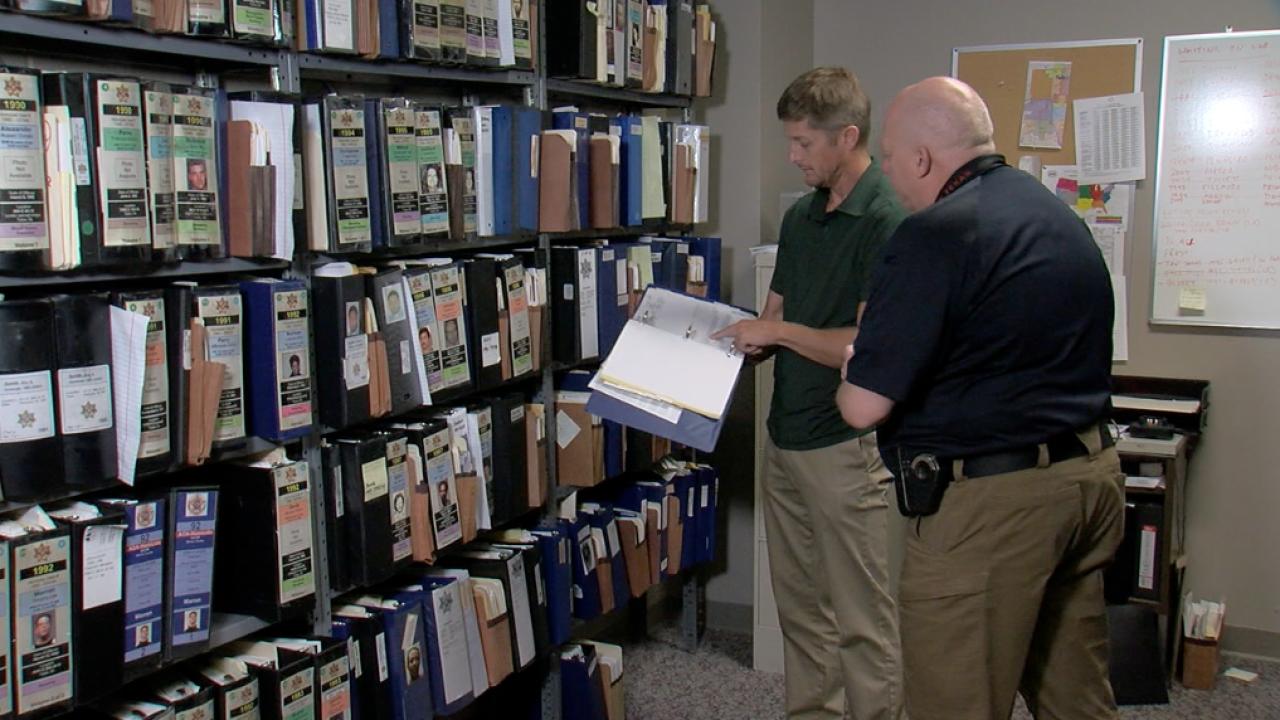
- Detectives reviewing archived cold case files.
- Shelves containing preserved evidence boxes from historic investigations.
- Quiet suburban neighborhood similar to locations in historic cold cases.
- Digital illustration of genetic genealogy and family tree analysis.
- Investigators announcing a breakthrough in a decades-old cold case.
- Symbolic scales of justice beside archived investigative documents.
Leave a Reply